
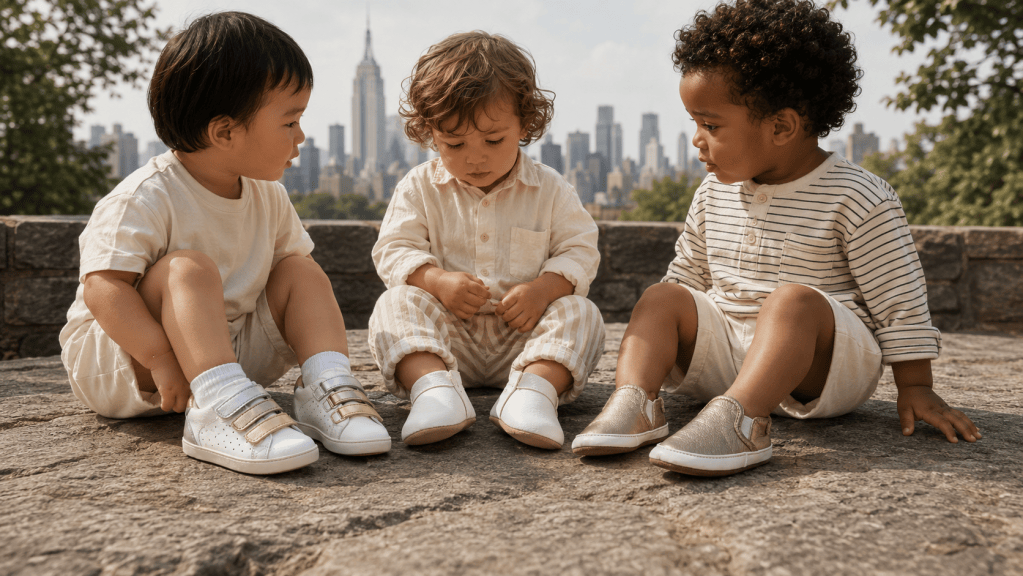
There’s a moment that sneaks up on you somewhere in the first year. Your baby has been perfectly happy in soft booties and footed pajamas, and then one day you’re at the playground being pulled by both hands so she can march across the pavement in cotton-soled Zutanos, and you realize the situation has changed. The booties that handled everything beautifully for ten months — airport floors, music class, stroller rides across the city — are not built for this. The seams are pulling. The soles are filthy. It’s time to look at first walker shoes.
But here’s the part that took us by surprise: the answer is not to put her in actual sneakers immediately. There’s a whole stage between soft baby booties and a proper first walker shoe that doesn’t get nearly enough attention, and if you skip it, you end up putting too much shoe on a delicate little foot that’s still learning what walking is all about.
As with most things baby-related, we started the conversation with our mom group. The recommendation was unanimous — Ibiza Kids, a children’s store on First Avenue that apparently every New York parent discovers at some point in their shoe search journey. Our friends with older babies were all in Stride Rite First Walkers and loved them. So we headed over to Ibiza Kids one afternoon with our friends and their eleven-month-old son. The owner was with another client, so a younger employee helped us instead. She was friendly, measured both kids’ feet, and genuinely tried. Unfortunately, she couldn’t find anything that worked — Evie’s foot was too small for what they had in stock, and our friends’ son, with his gloriously chubby baby feet, was the opposite problem. We both left empty-handed.
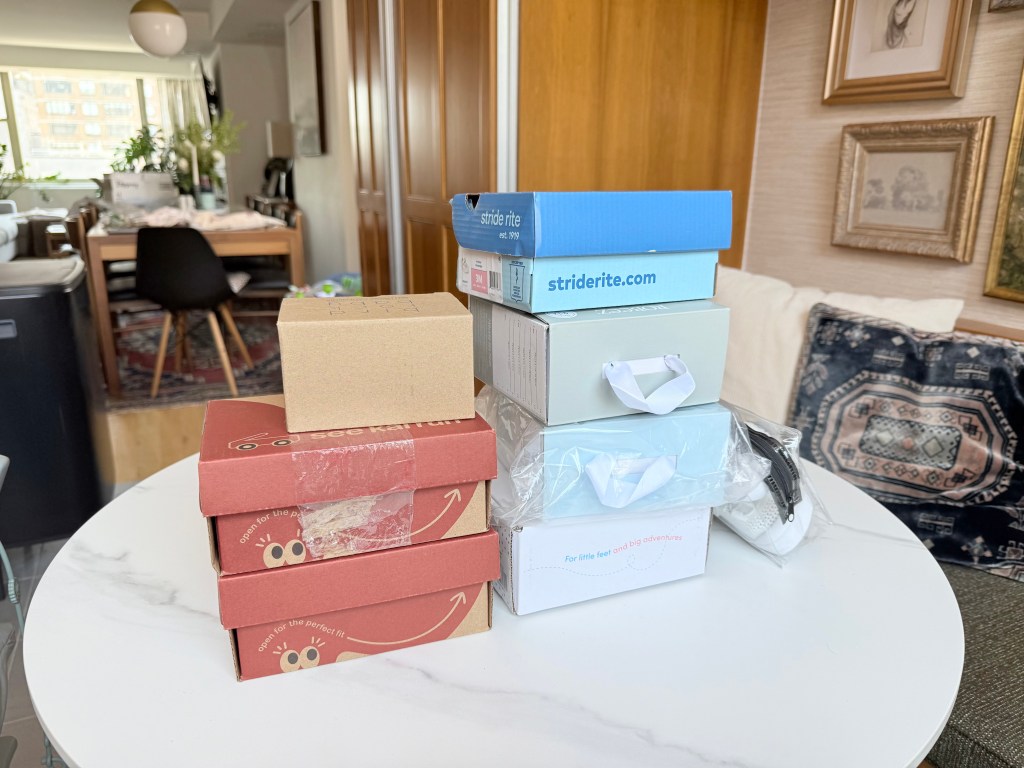
What followed was several weeks of research, hours spent separating opinions from facts, and, ultimately, 10 shoes from seven different brands arriving at our door.
Disclosure: This post contains affiliate links. If you purchase something through one of these links, I may earn a small commission at no extra cost to you. I only recommend products we actually use and love.
What a Good In-Between Shoe Actually Looks Like
So what do you do after the Zutano era but before the sneaker era? The reason this stage is confusing is that the needs are genuinely specific. A baby who is walking assisted or just taking their first independent steps needs something very different from a toddler running confidently around a playground.
As it turns out, the podiatric guidance is consistent: feet at this stage need to feel the ground. The more material and structure between baby’s foot and the surface below it, the harder it is for them to develop the balance, muscle strength, and natural gait they need.
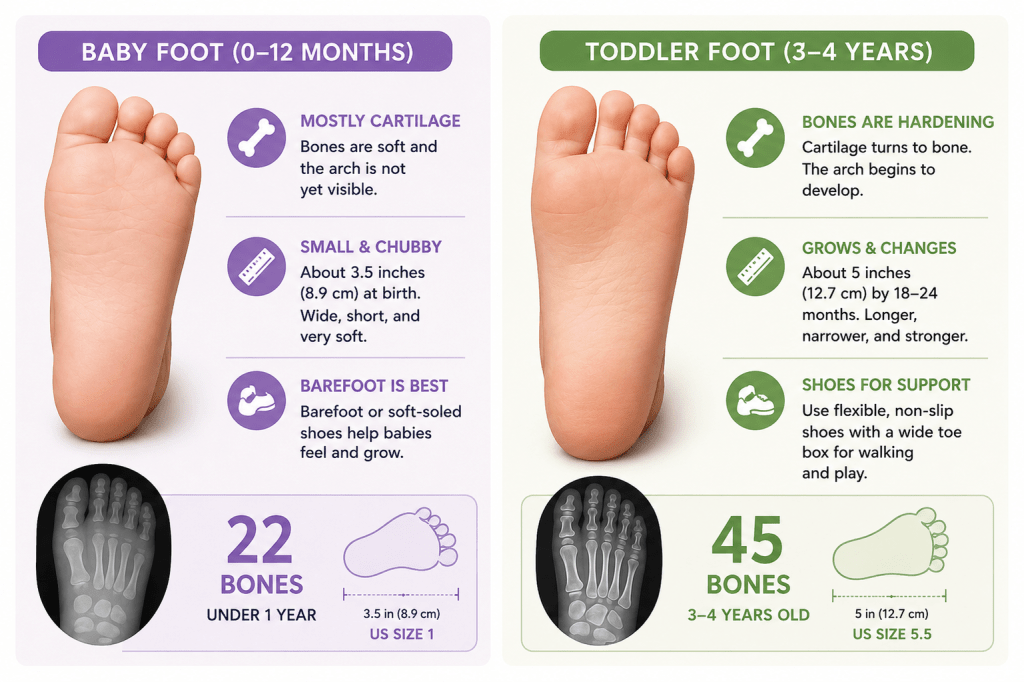
This diagram is for informational purposes only and is not a substitute for professional medical advice
This is why a memory foam insole might sound appealing to an adult but is actually the wrong call for a first shoe — I’m looking at you, Stride Rite. It’s also why a stiff rubber sole that might be fine on a three-year-old is too much shoe for a ten-month-old taking assisted steps.
Here’s what we learned to look for:
- A zero-drop sole. Completely flat from heel to toe, no elevation or wedge that would change the angle of baby’s foot.
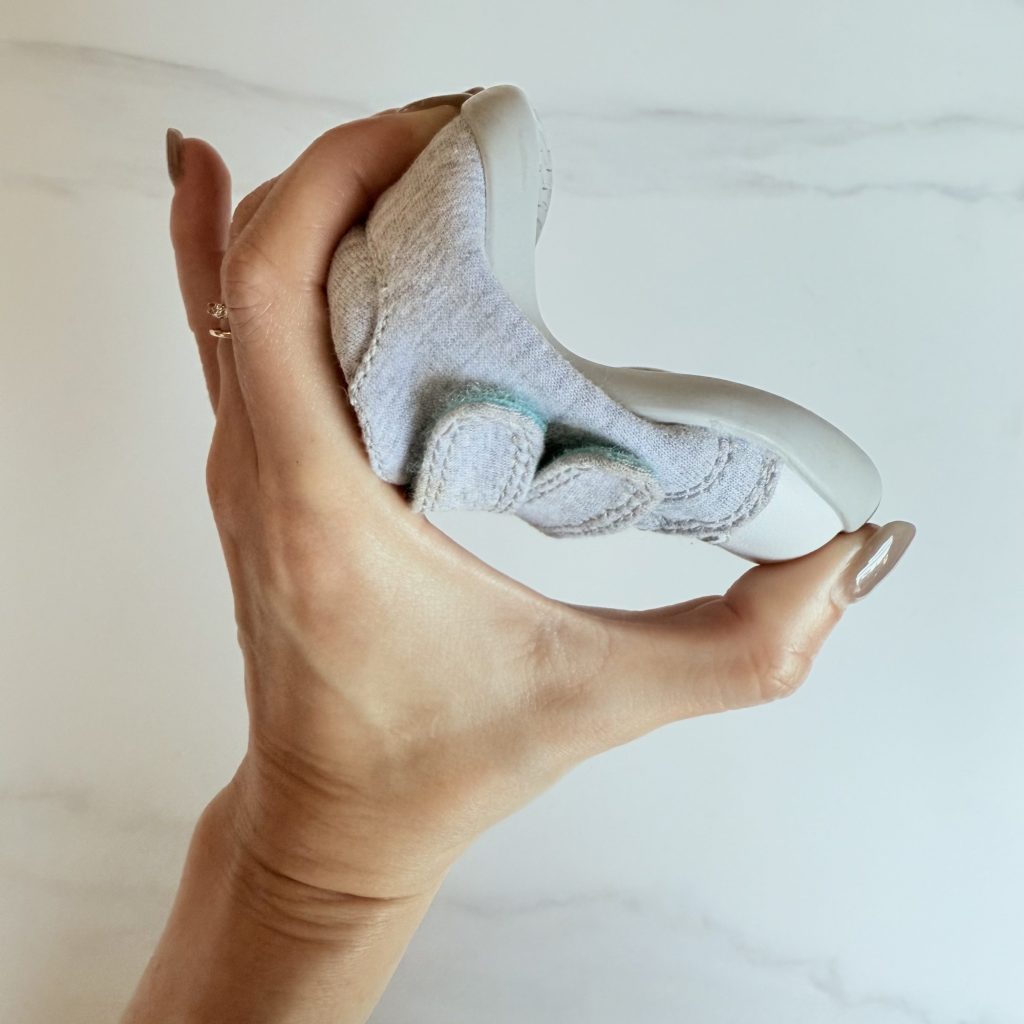
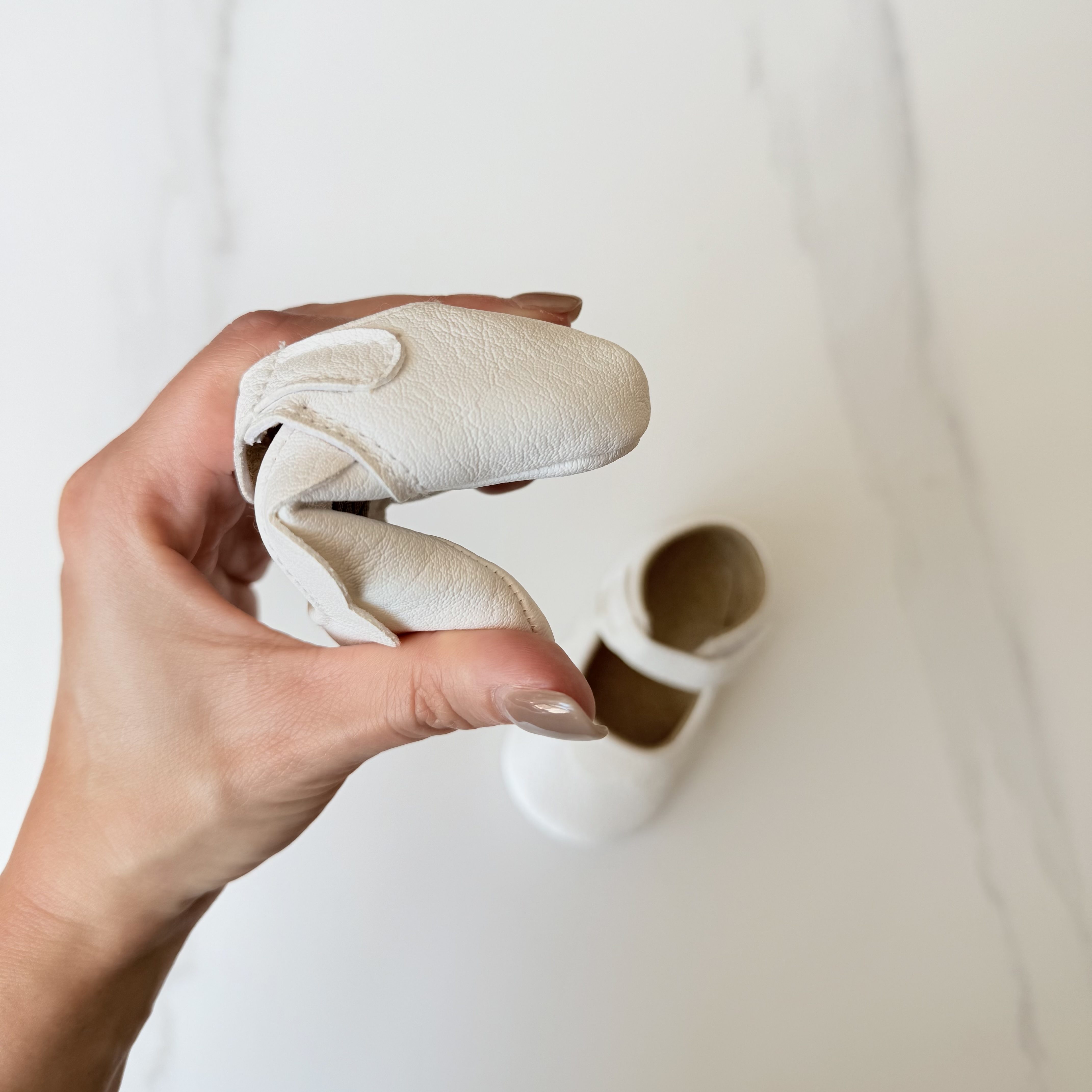
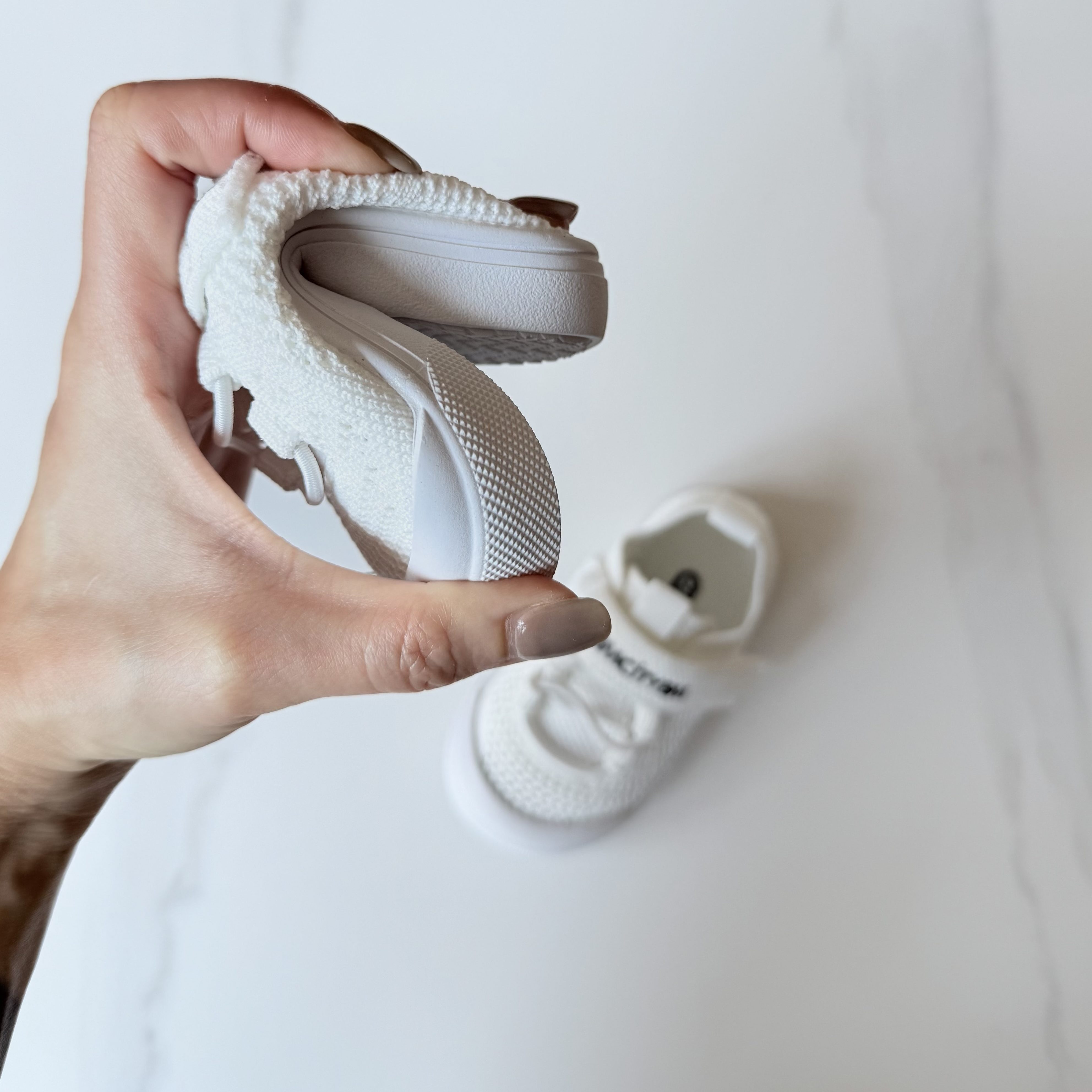
- A flexible sole. Flexible enough to fold in half with one hand, because if you can’t do that easily, the shoe won’t bend naturally with baby’s steps either.
- A wide toe box. A shape that lets toes spread and grip rather than being squeezed together.
- An easy and secure fastening system. The shoe needs to stay on, and it should be something parents can manage with a baby who would rather be doing anything else, which means it should also open wide enough to place baby’s foot directly onto the insole rather than trying to stuff it in from the top.
- A measurement-based fit. Fit based on your baby’s actual foot measurement in inches, not the size number on the box, which we learned the hard way. Size numbers vary not just between brands but between different styles from the same brand.
That last point is worth saying again. We measured Evie’s foot at just around four inches and ordered a size 3 across the board. What we got were shoes ranging from 4 inches to 4.9 inches. Those are not the same shoes. Measure your baby’s foot, find each brand’s size chart, and match the measurement — not the number.
Ten Shoes, Seven Brands
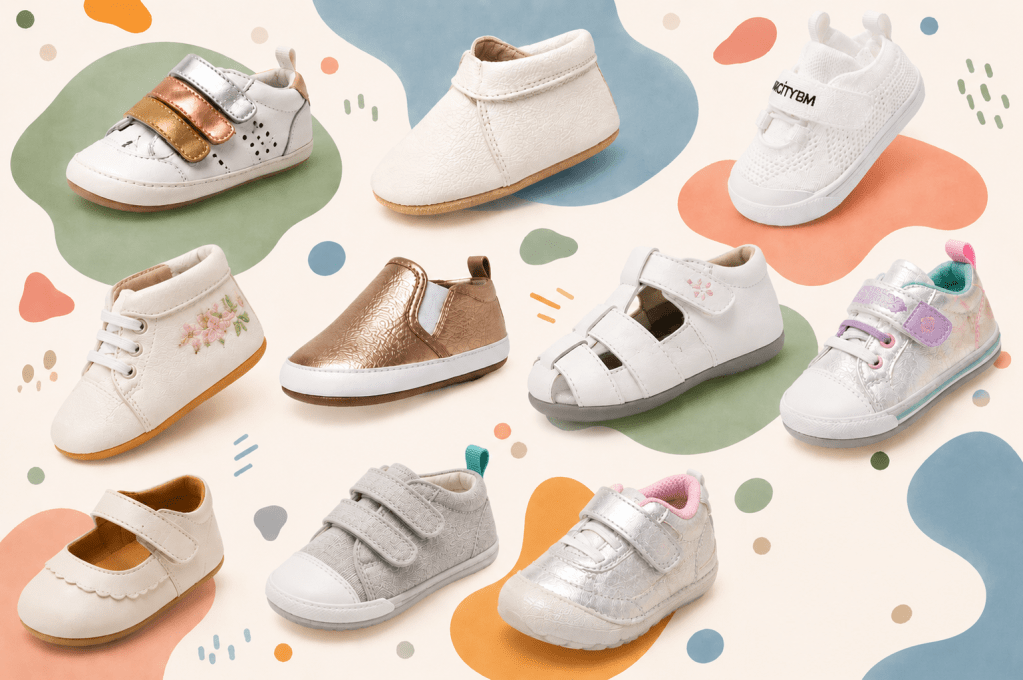
We did most of our research online — partly because the in-store experience hadn’t gone our way, and partly because ordering multiple pairs to test and return is sometimes the most efficient way to find what works for a baby whose foot you can measure at home. From there, we pulled from a mix of brands recommended by other parents, brands that kept coming up in our own research, and a couple of wild cards thrown in to compare across price points. Ten shoes, seven brands, all tested on the same narrow four-inch foot at the same stage of walking. Here’s what we found.


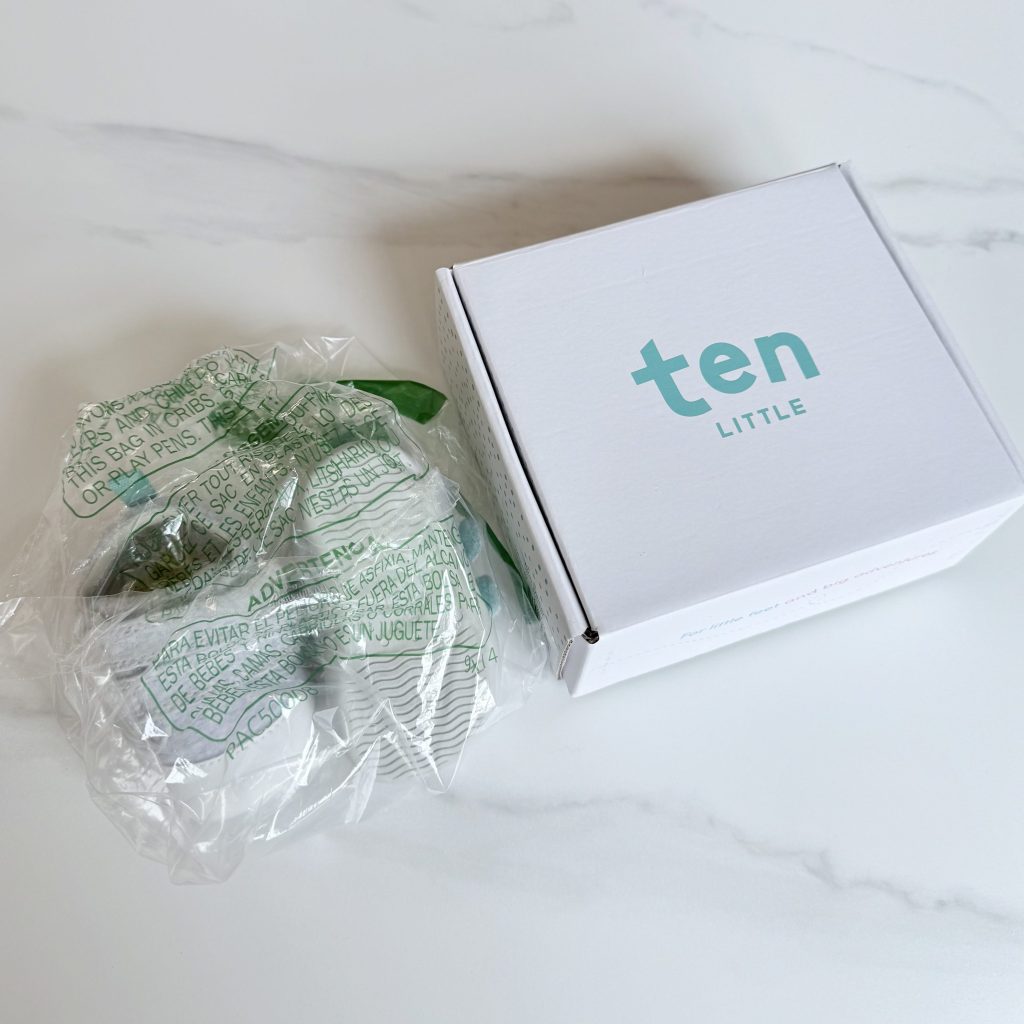
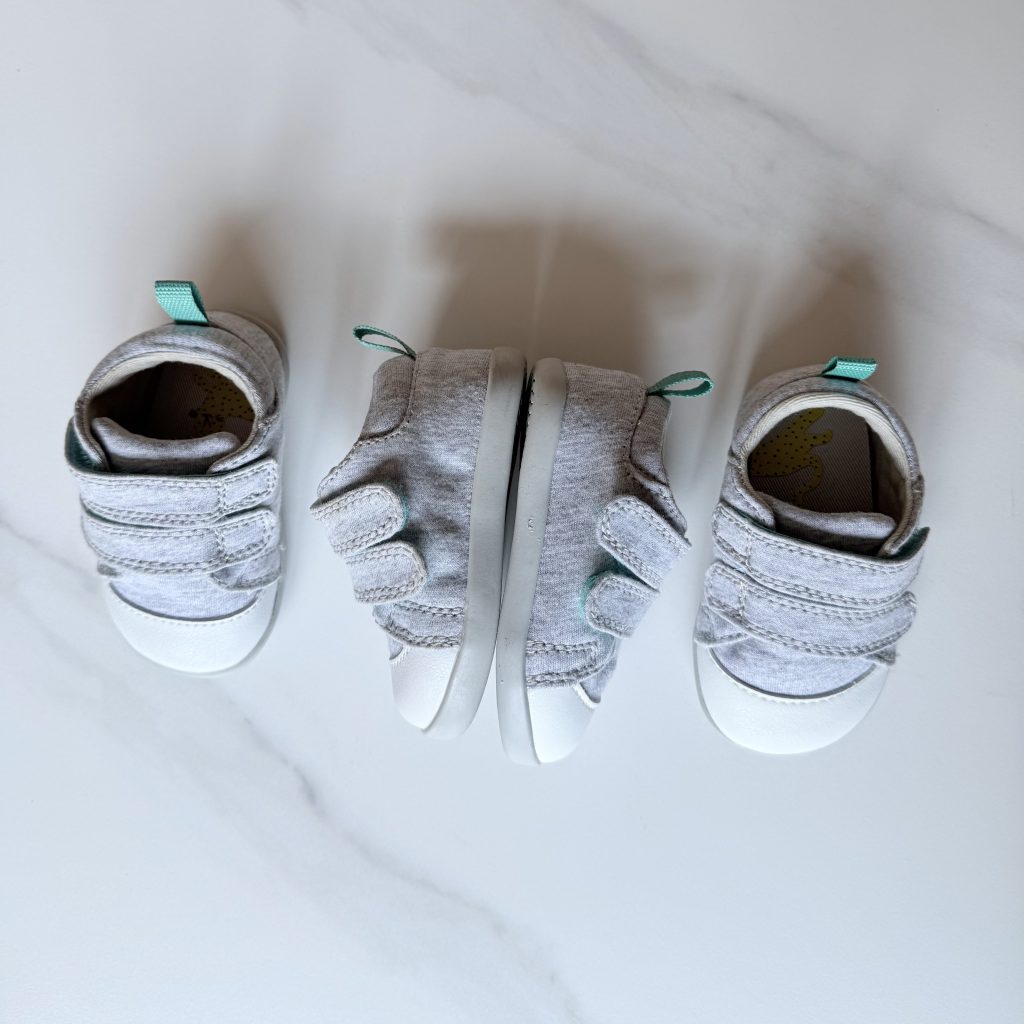
1. Ten Little First Walker

Ten Little First Walker Shoe in Grey
- Sole: Rubber
- Fastener: Velcro
- Material: Cotton
- Size: 3.5 / 4.2 inches
- Price: 42.00 USD
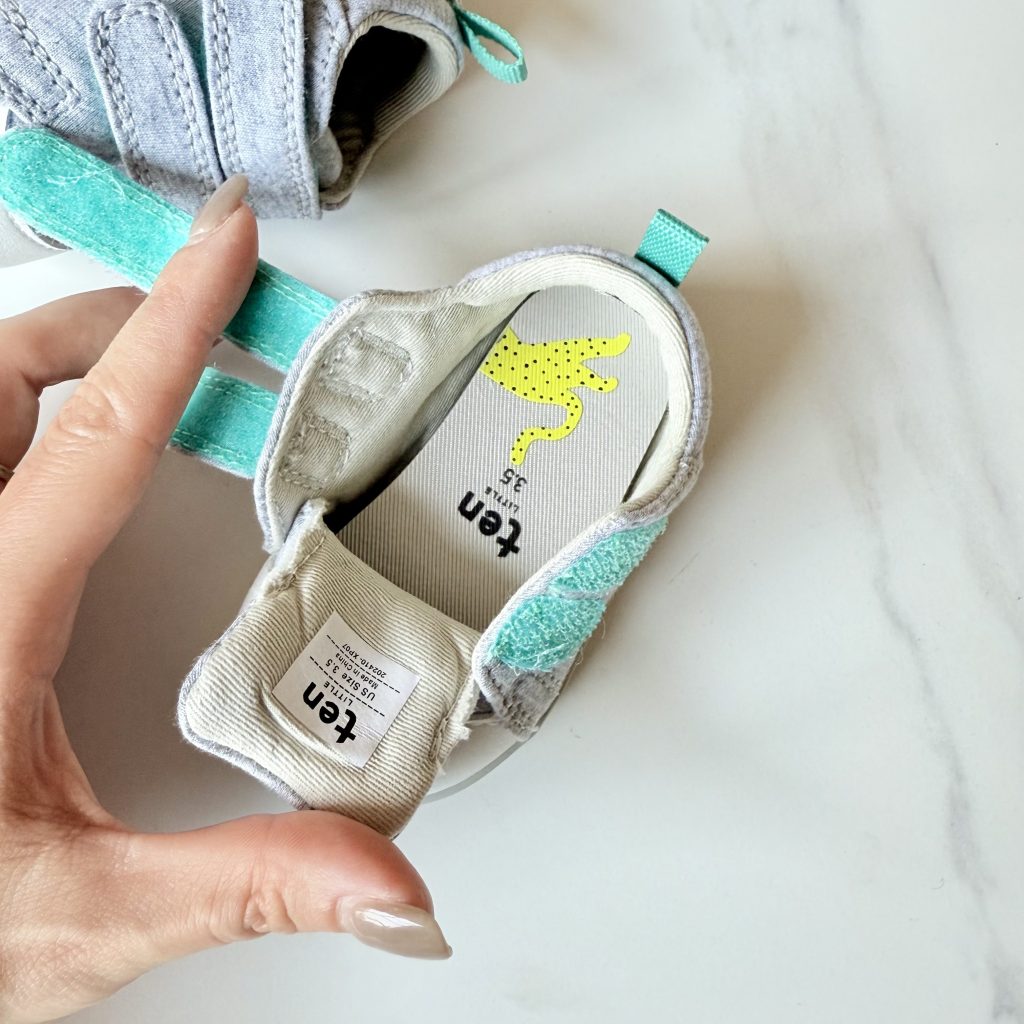
One of the first shoes to catch my attention was Ten Little First Walkers, and for good reason. The shoe is simple, lightweight, and minimal in material without feeling flimsy — and the heather grey colorway is the kind of neutral that goes with everything without trying too hard. We ordered through Amazon rather than direct, and unfortunately, the size 3 arrived dirty in a plastic bag, which was not the introduction we were hoping for. Evie’s toes were also hitting the edge, so we sized up to the 3.5 and got a perfect fit.
The detail that won us over: the tongue pulls all the way down and has its own velcro tab that holds it up once fastened, so it can’t bunch down against baby’s soft toes while walking. It sounds small, but it isn’t.
That said, our one hesitation is that the rubber sole is slightly stiffer than we’d like for a very early assisted walker. For a baby walking more independently, this moves up the list significantly.


2. See Kai Run Stevie Mini
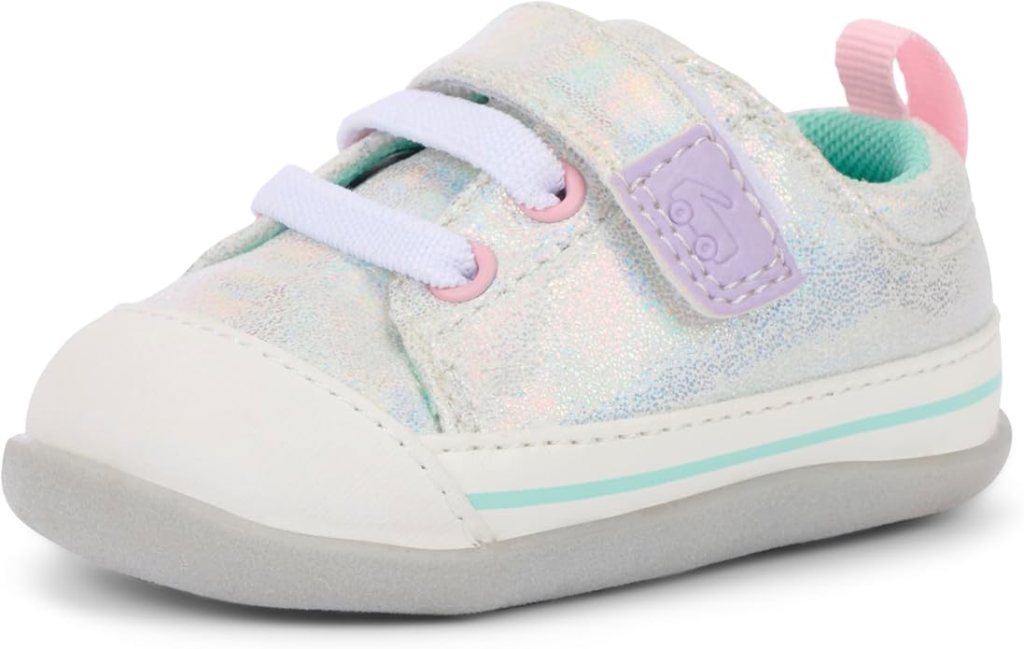
See kai run stevie mini shoe
- Sole: Rubber
- Fastener: Velcro
- Material: Textile
- Size: 3 / 4.1 inches
- Price: 51.99 USD
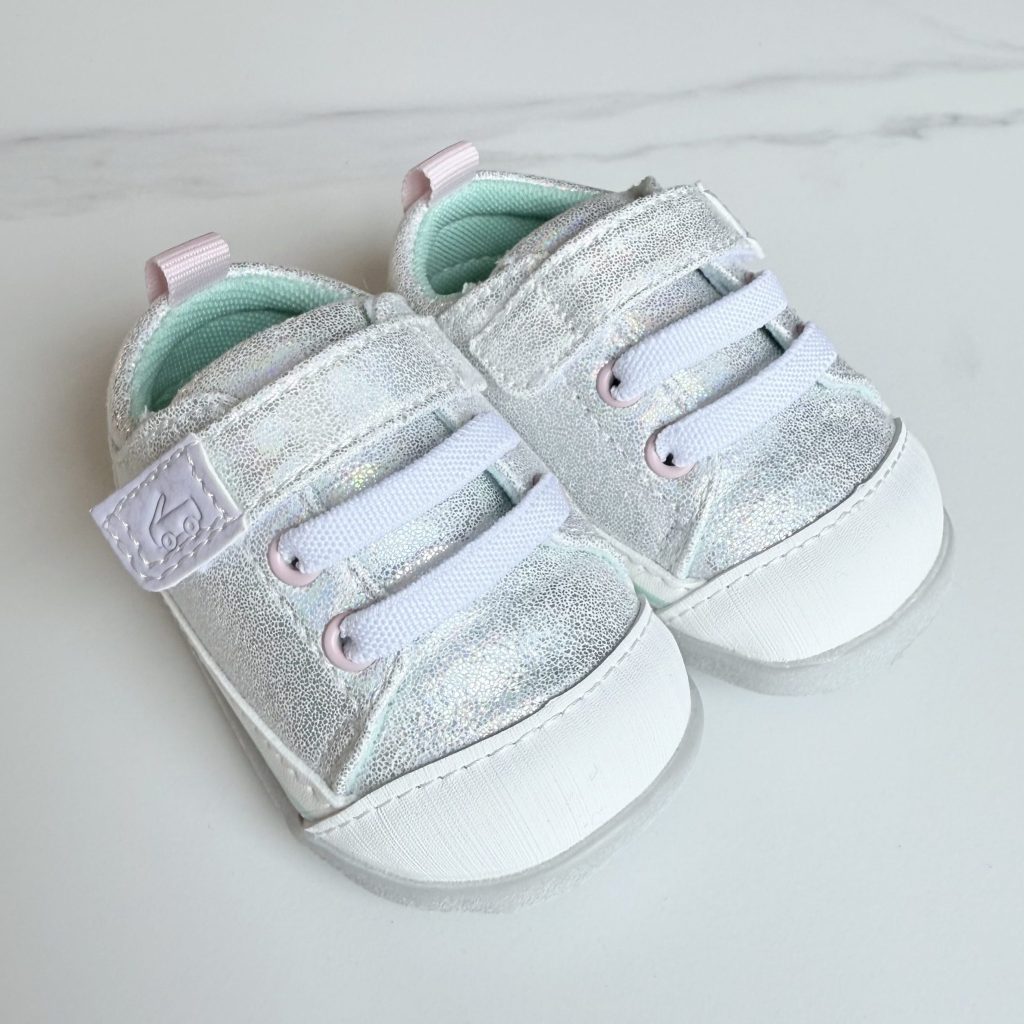
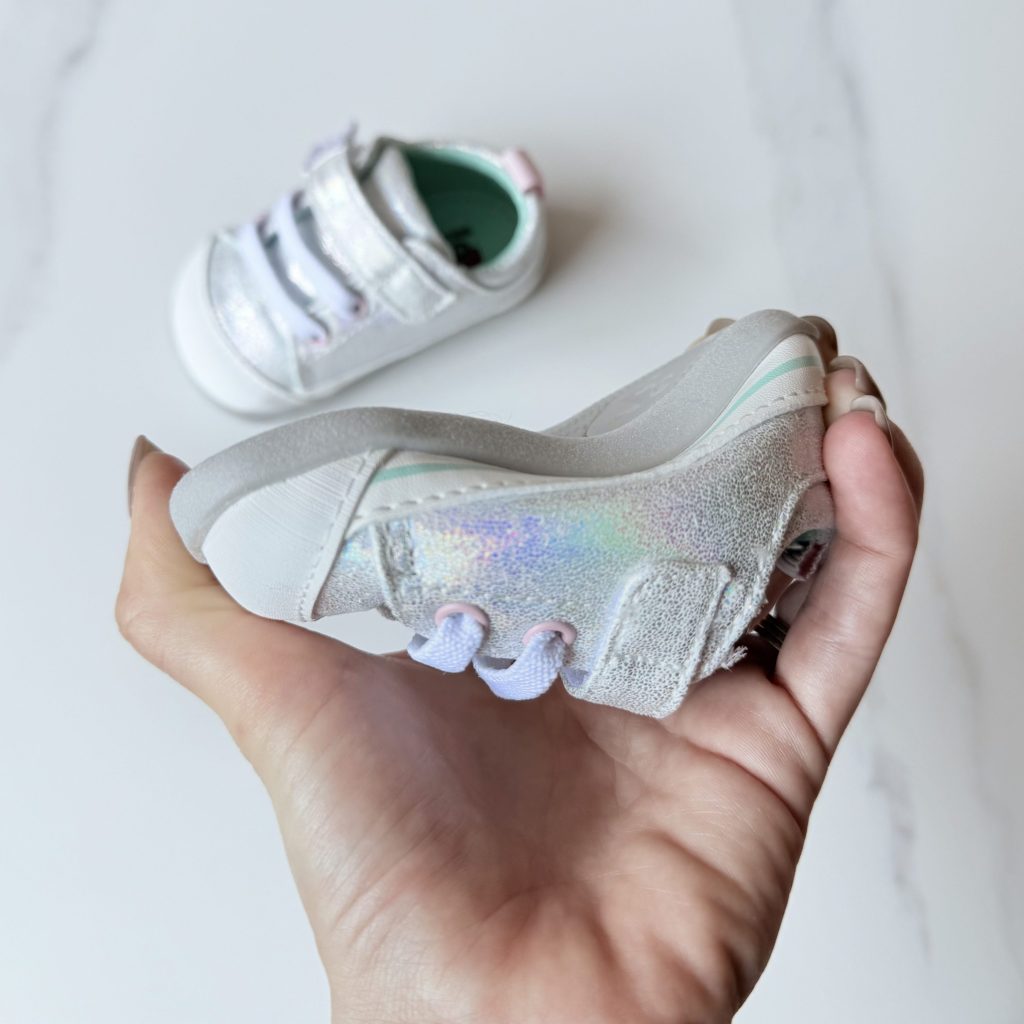
It’s my opinion that See Kai Run makes some of the cutest baby shoes on the market, and the Stevie Mini is no exception. Slim, lightweight, and metallic silver with teal and pink details that made it the most visually interesting shoe we tested. In size 3, the fit was pretty good for Evie’s narrow foot.
Unfortunately, the tongue was the problem — unlike the Ten Little, nothing holds it in place, so it bunched up at the base against her toes while walking. Additionally, the rubber sole is less flexible than we’d like at this stage. Even so, we’ll take another look at See Kai Run when Evie is a more confident walker. Not yet.
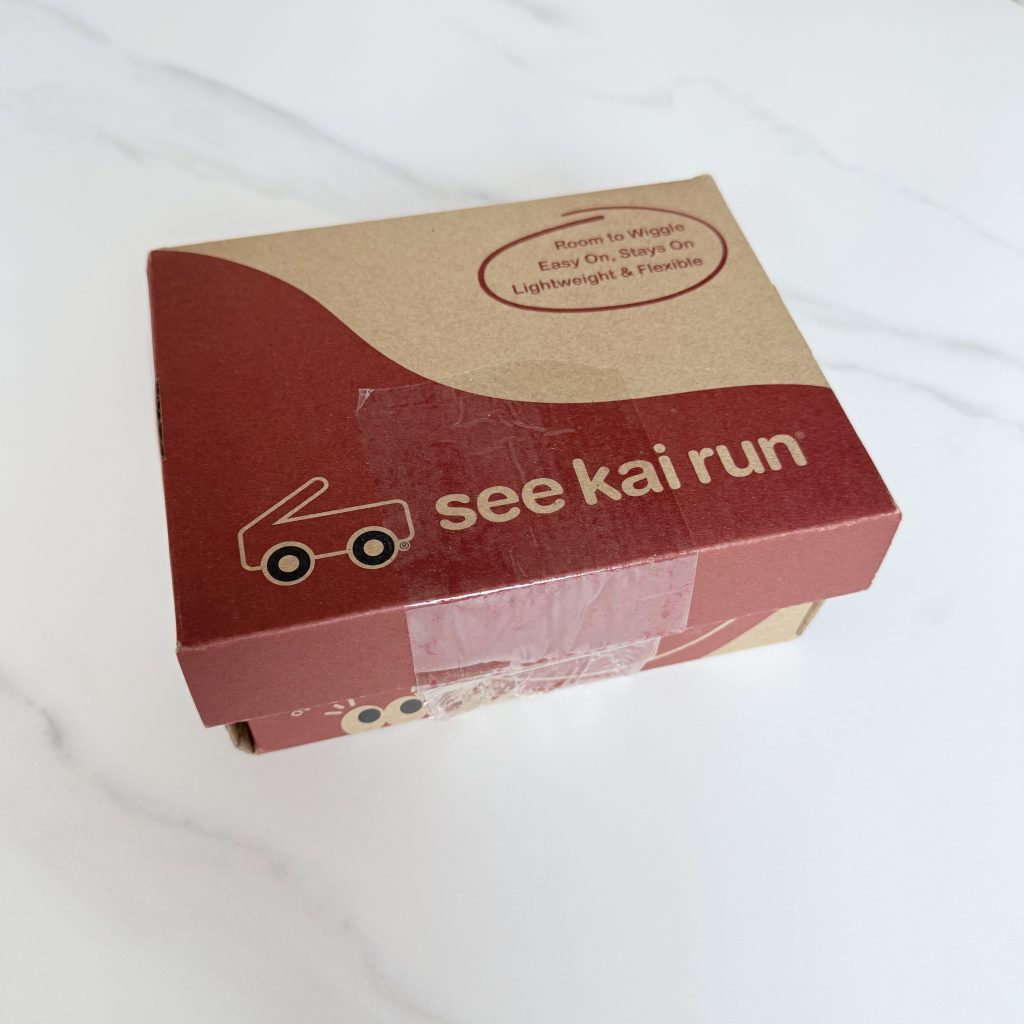

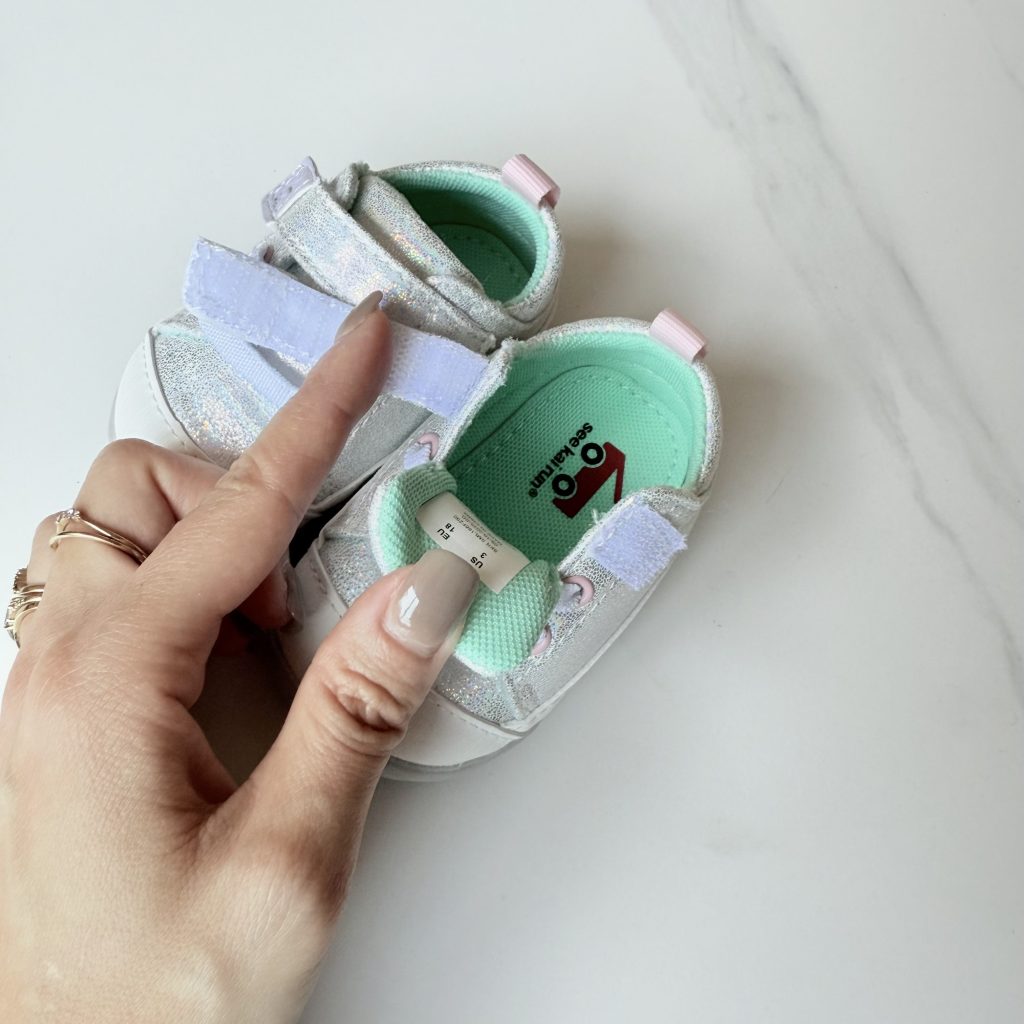
3. See Kai Run Brook III
See Kai Run Brook iii sandal
- Sole: Rubber
- Fastener: Velcro
- Material: Leather
- Size: 3 / 4.1 inches
- Price: 53.99 USD
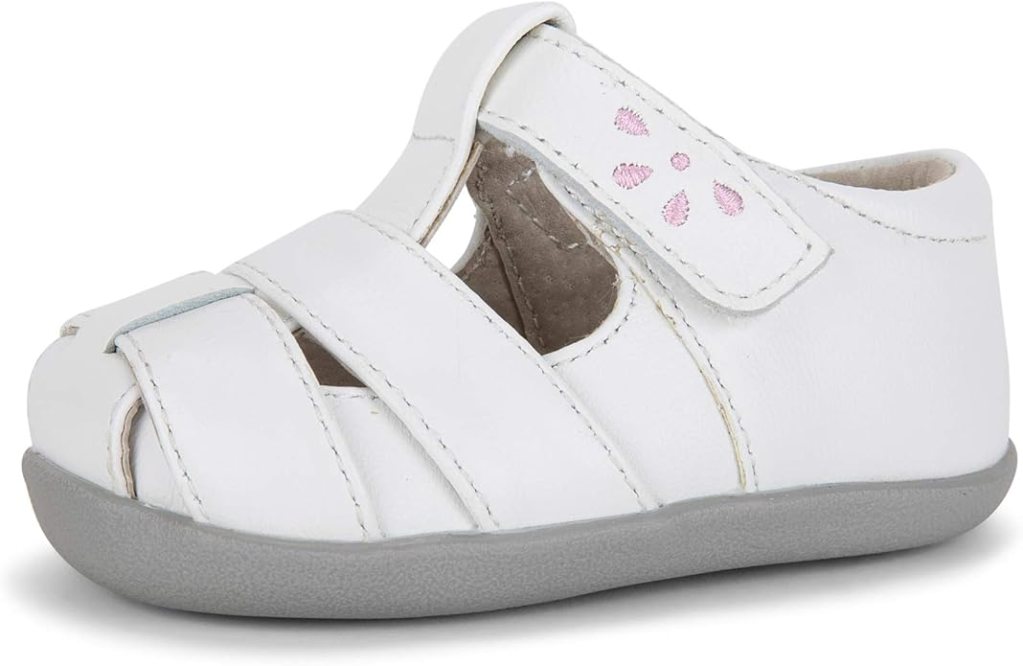
We’re heading into summer here in New York City, so I wanted to take a look at some sandal options. The second we took the See Kai Run Brook lll shoe out of the box the verdict was clear: too stiff. The sole is thick and rigid in a way that felt completely wrong for a ten-month-old assisted walker. The embroidered floral sandal design is lovely and the materials are quality — this is a shoe for a toddler, not a new walker. Filed under: come back later.
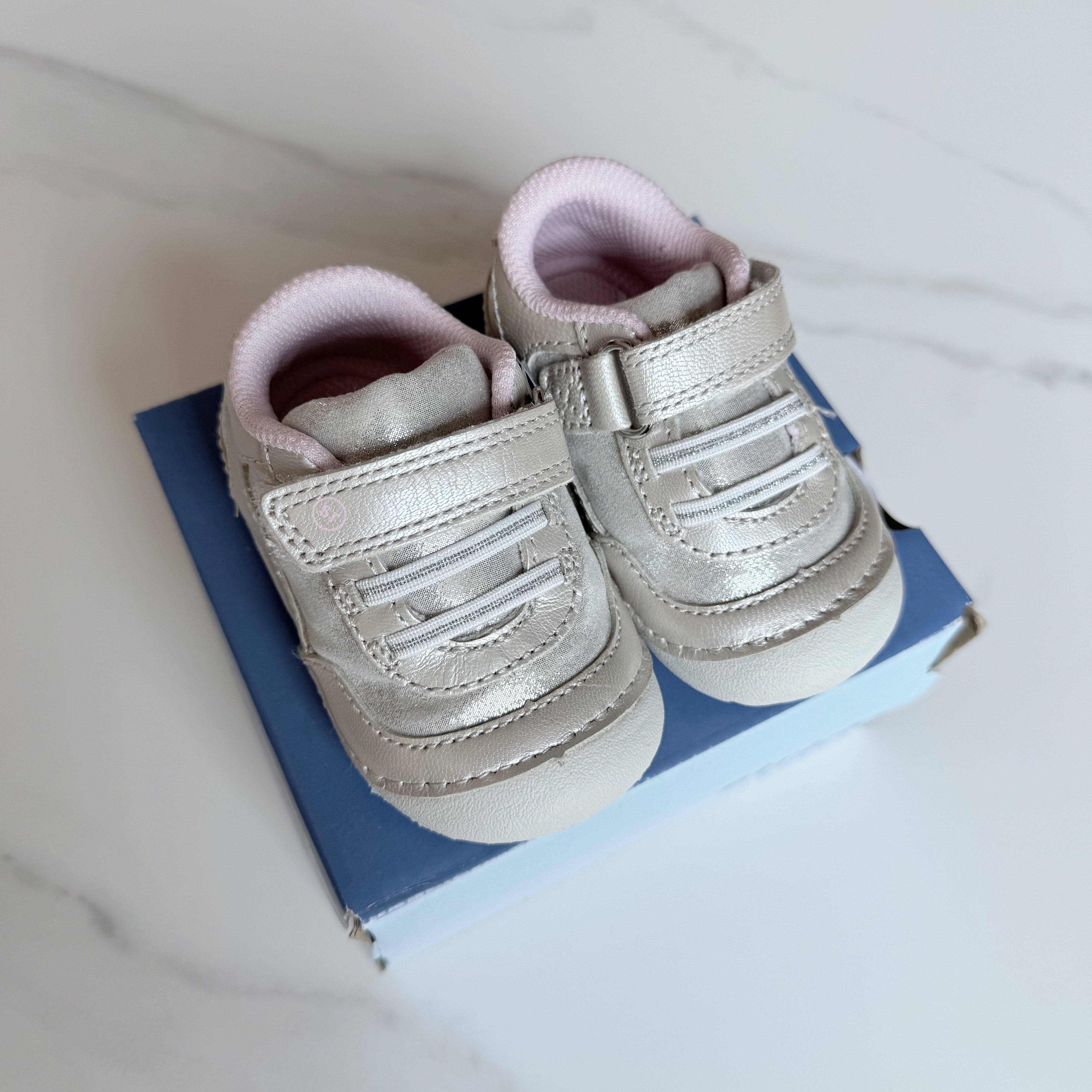
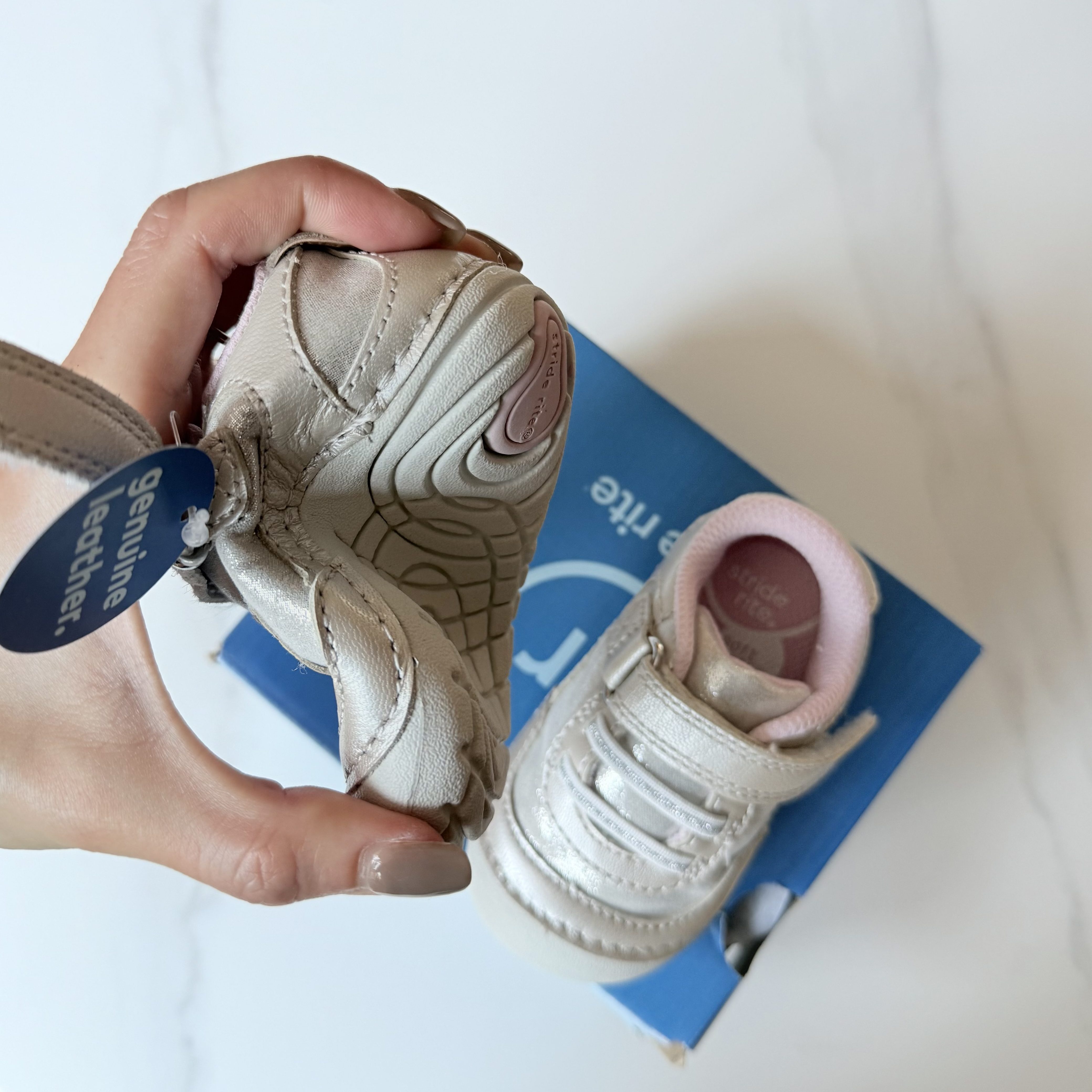
4. Stride Rite Soft Motion Jazzy
Stride Rite Soft Motion Jazzy shoe in champagne
- Sole: Rubber
- Fastener: Velcro
- Material: Leather / Synthetic
- Size: 3 / 4.3 inches
- Price: 49.95 USD
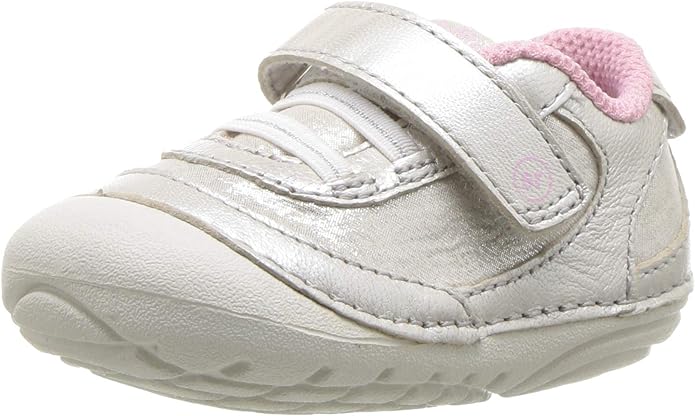
A lot of moms told us a Stride Rite First Walker was the shoe to get. We respectfully disagree — for this stage, at least. The design is cute, but the size 3 had too much toe room for Evie’s 4-inch foot and they fell off after a few steps, even with the velcro fastened. The memory foam insole, which sounds appealing, is actually counterproductive for a new walker: the whole point is to minimize material between foot and ground, and memory foam does the opposite.
We can see the Stride Rite Soft Motion Jazzy making a lot of sense for a confident kid running on a playground. For an assisted ten-month-old walker, it’s just too much shoe.

5. Stride Rite Emilia Baby Bootie
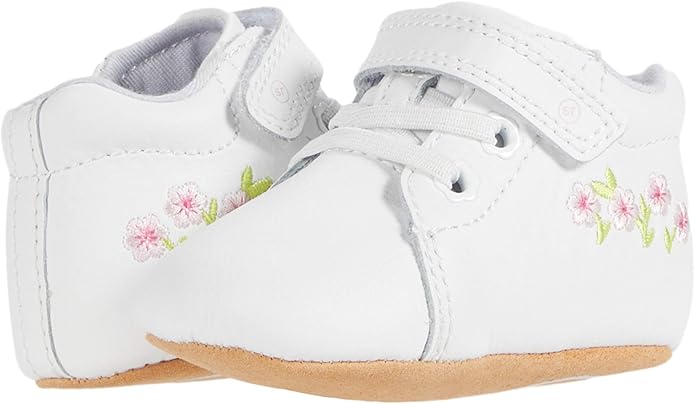
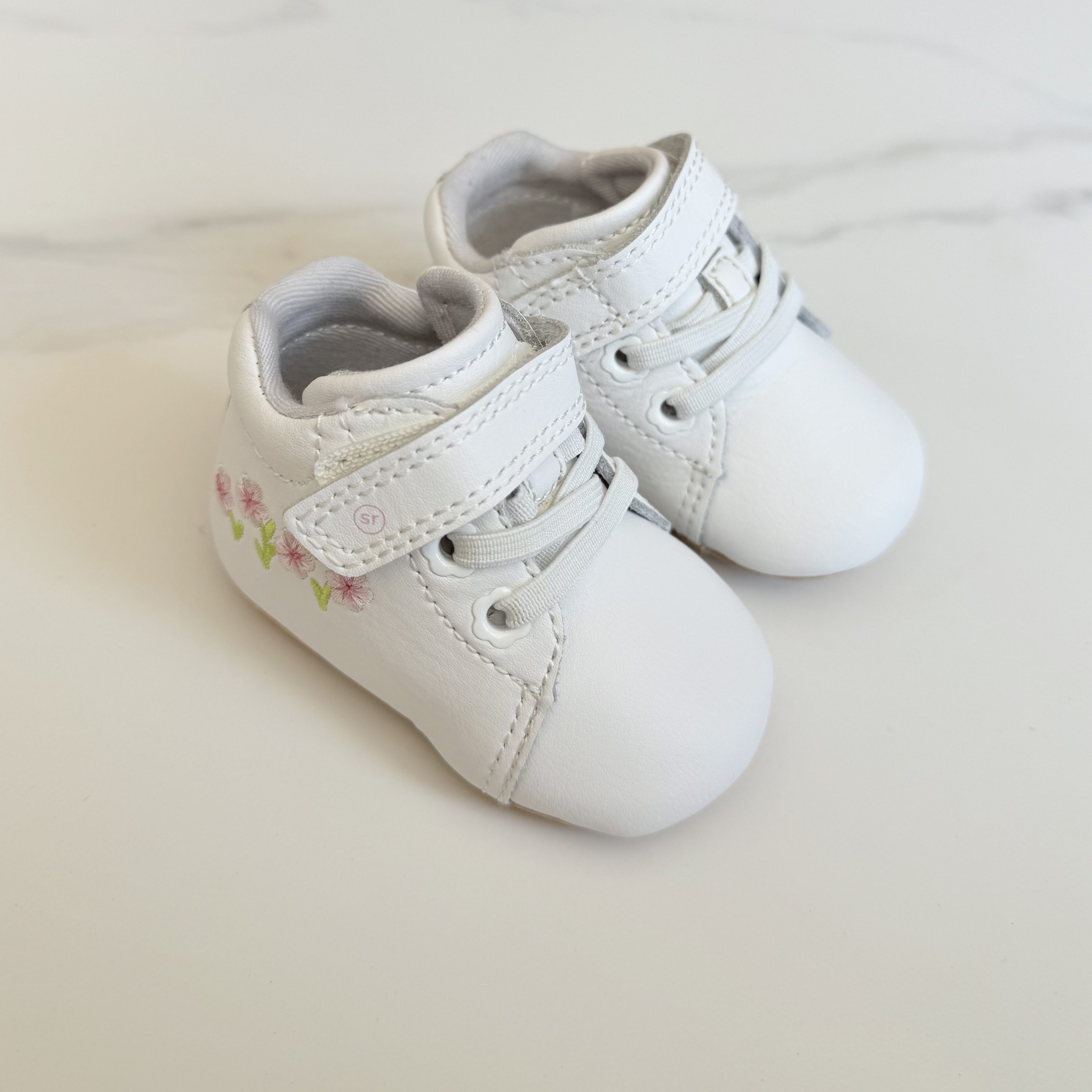
Stride Rite Emilia Baby Bootie
- Sole: Suede
- Fastener: Velcro
- Material: Leather
- Size: 3 / 4.2 inches
- Price: 30.00 USD
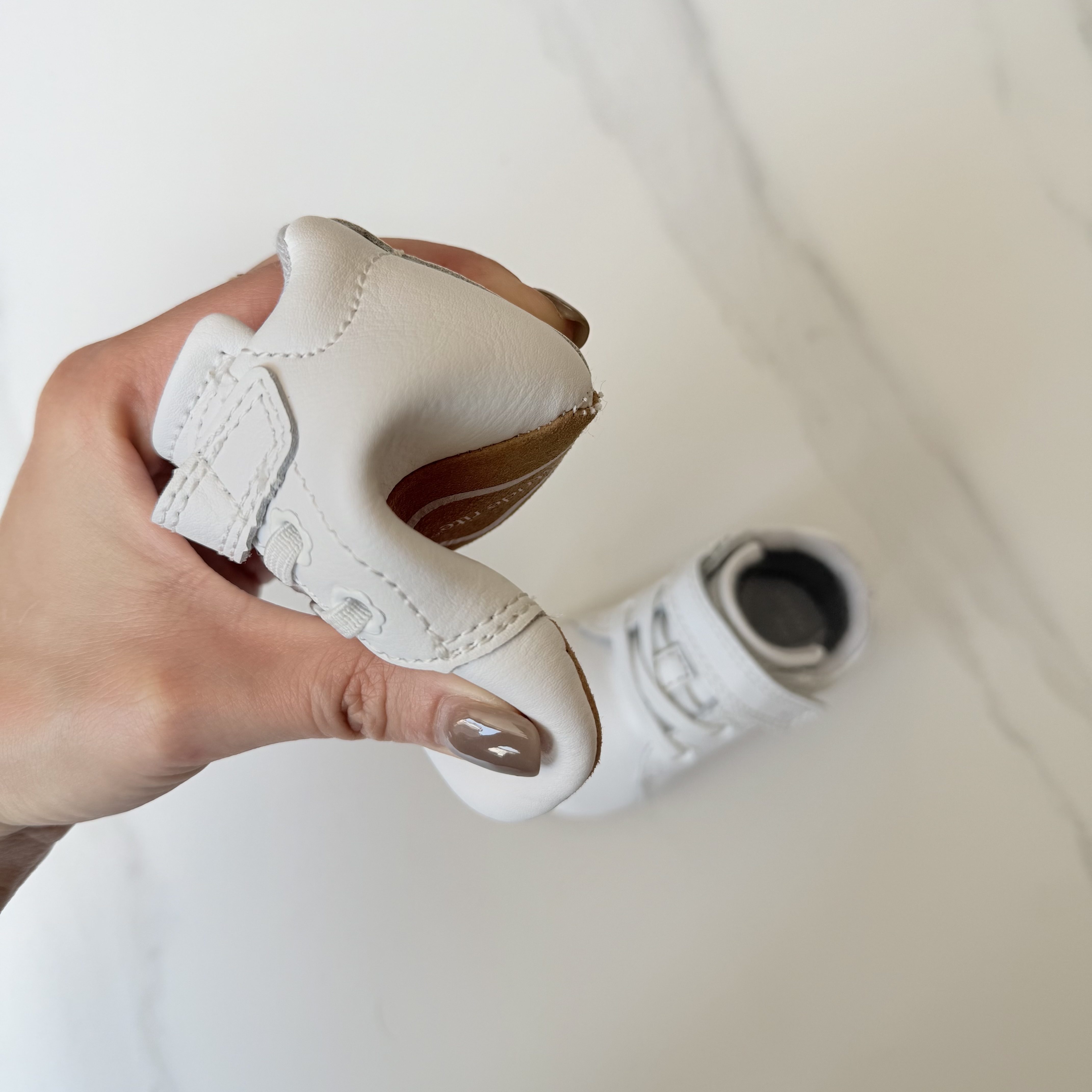
The Stride Rite Emilia Baby Bootie is your classic baby shoe — sweet embroidered white leather, a sole that feels more substantial than a fabric bootie without being stiff, and the kind of design that just looks timeless. We wanted to like these. The problem was the opening — getting Evie’s foot in was a real struggle, and once fastened, the ankle felt tight and restrictive. For a baby who already has opinions about having shoes put on, this was a non-starter.
6. Robeez Soft Sole Crib Shoes

Robeez Soft Sole Crib Shoes in Leah Rose Gold Leather
- Sole: Suede
- Fastener: Elastic
- Material: Leather
- Size: 6-12 M / 4.9 inches
- Price: 38.00 USD
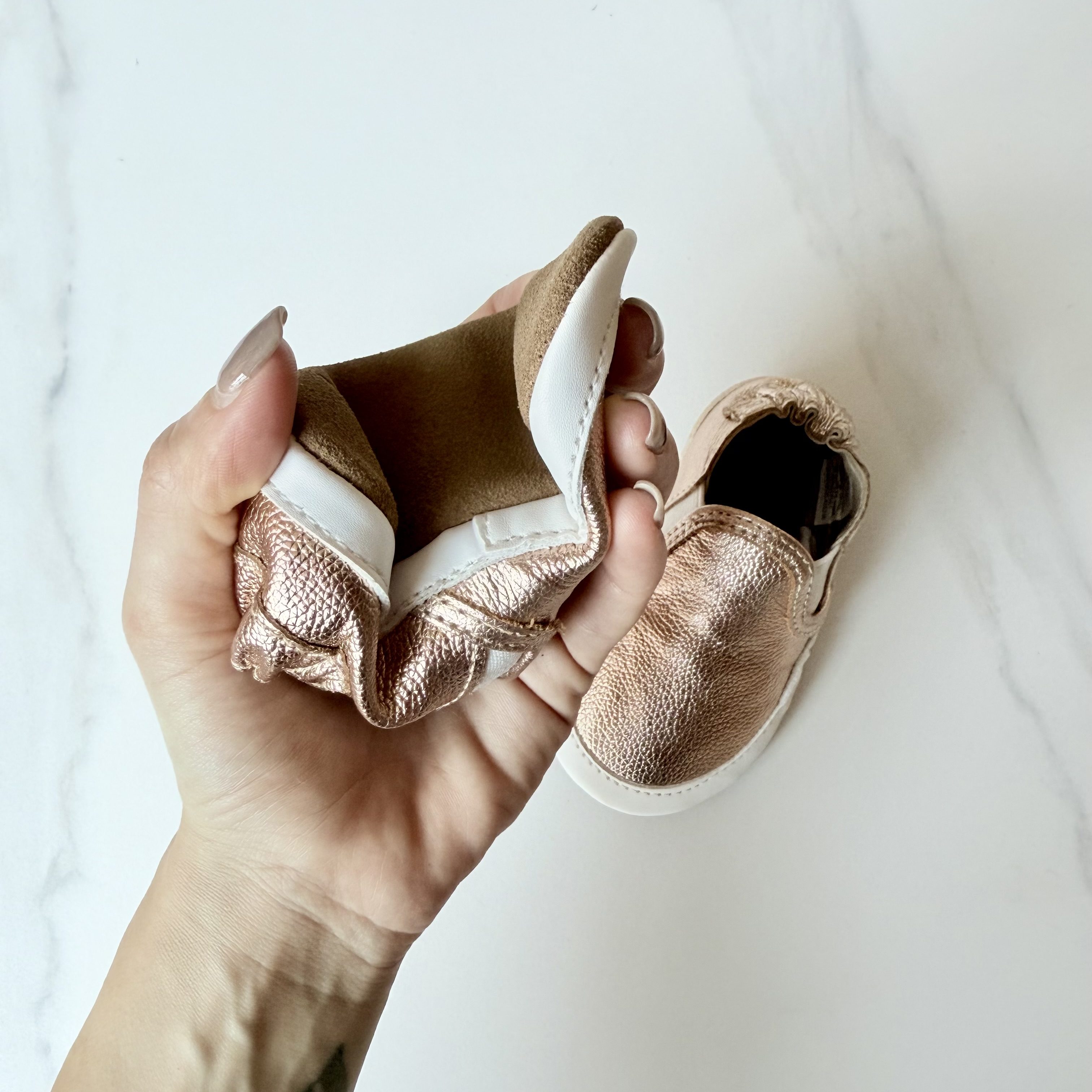
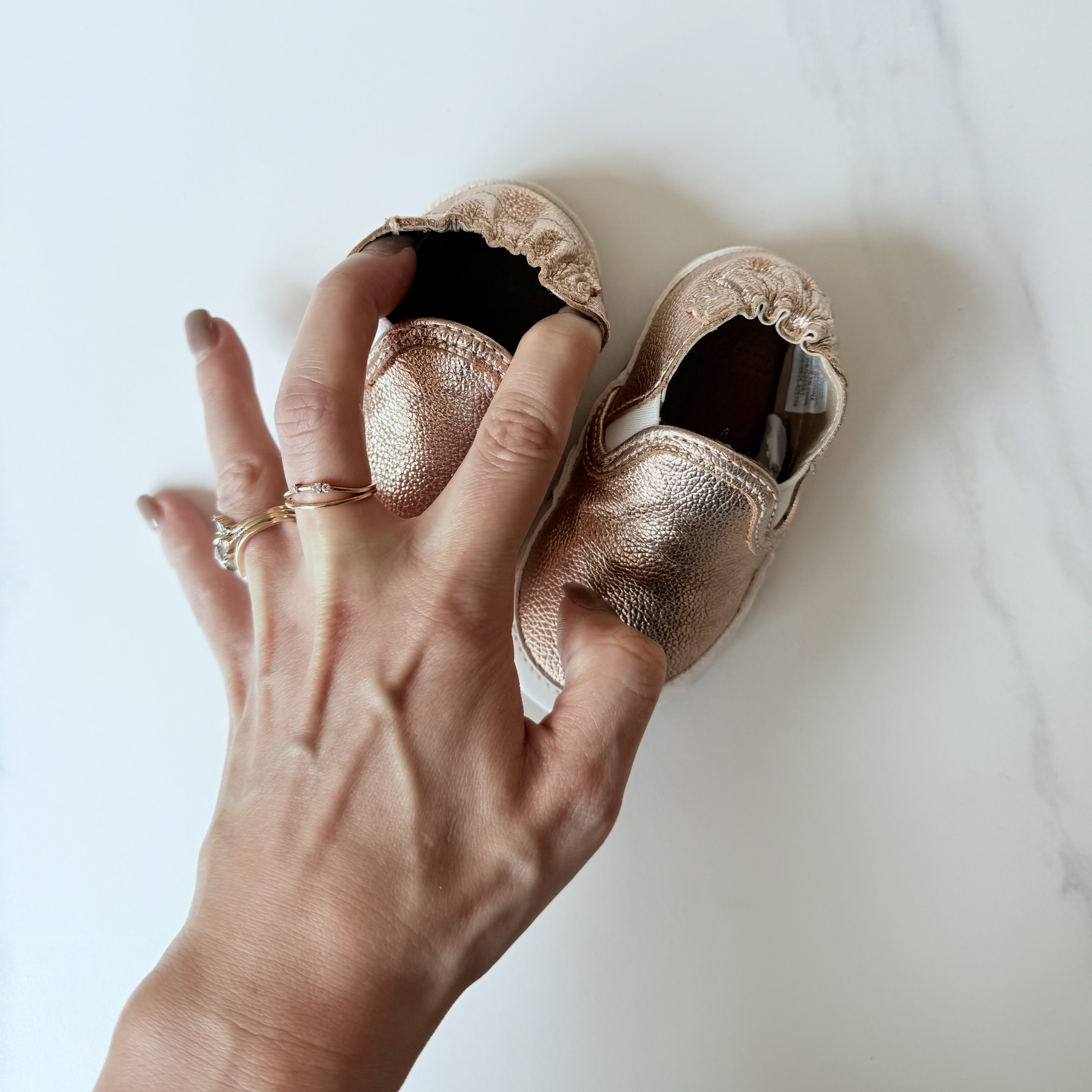
One of the most consistently recommended brands in our research was Robeez, so we tested more than one style. The Soft Sole Crib Shoe in Rose Gold was the first, and the elastic opening was our downfall. Getting it over Evie’s foot was difficult, and once on, it felt too tight around her ankle. The 6-12 month sizing also left too much toe room — the size bands on some Robeez styles are just too broad to get a precise fit.
The suede sole itself is lovely and flexible, and for a baby not yet putting real miles on their feet, this would be a beautiful option. For an active assisted walker hitting the playground pavement — it wasn’t right for us.

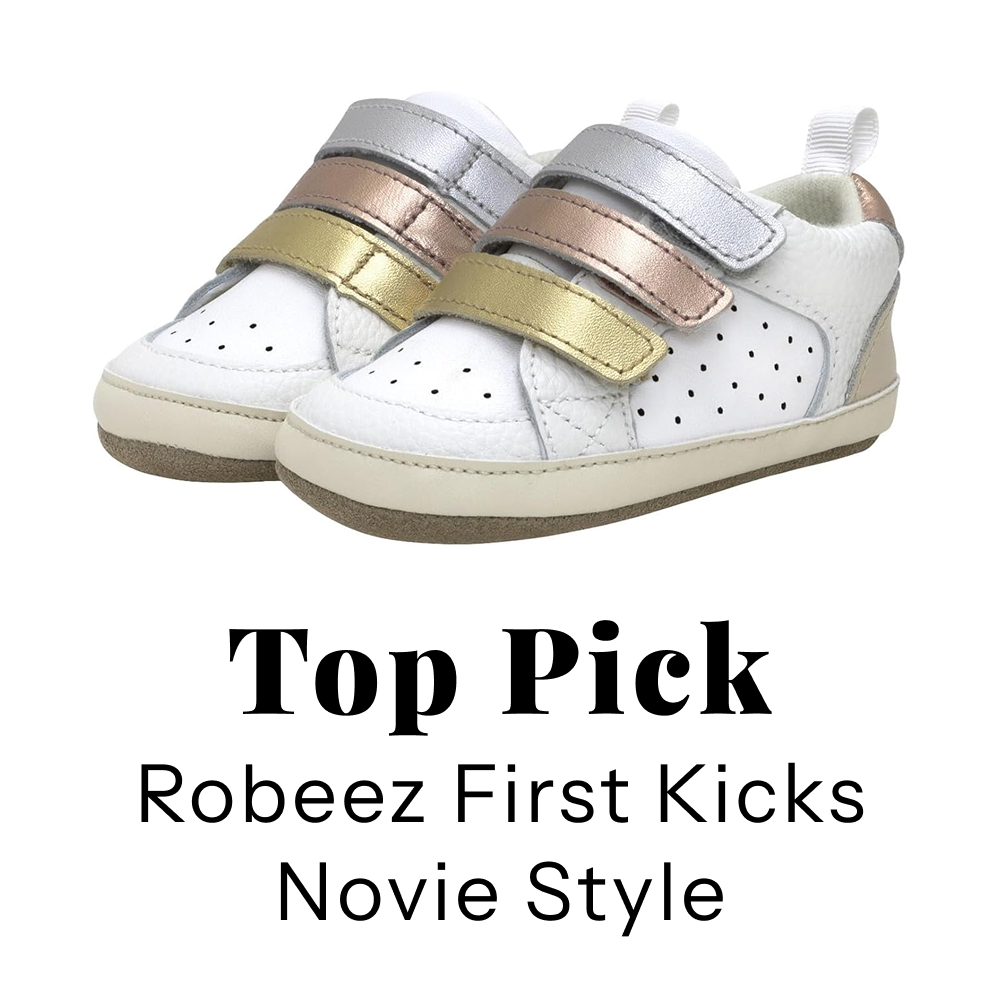
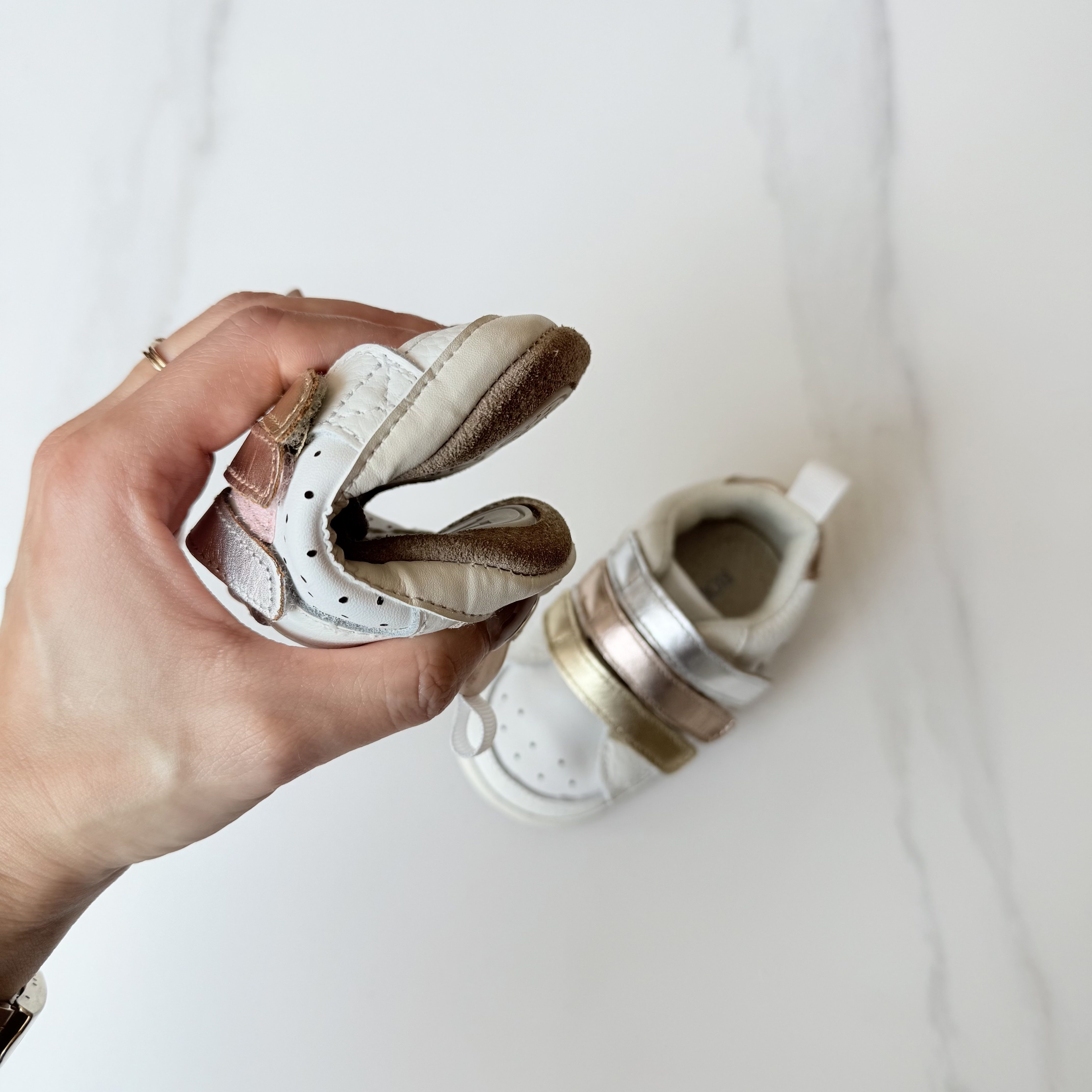
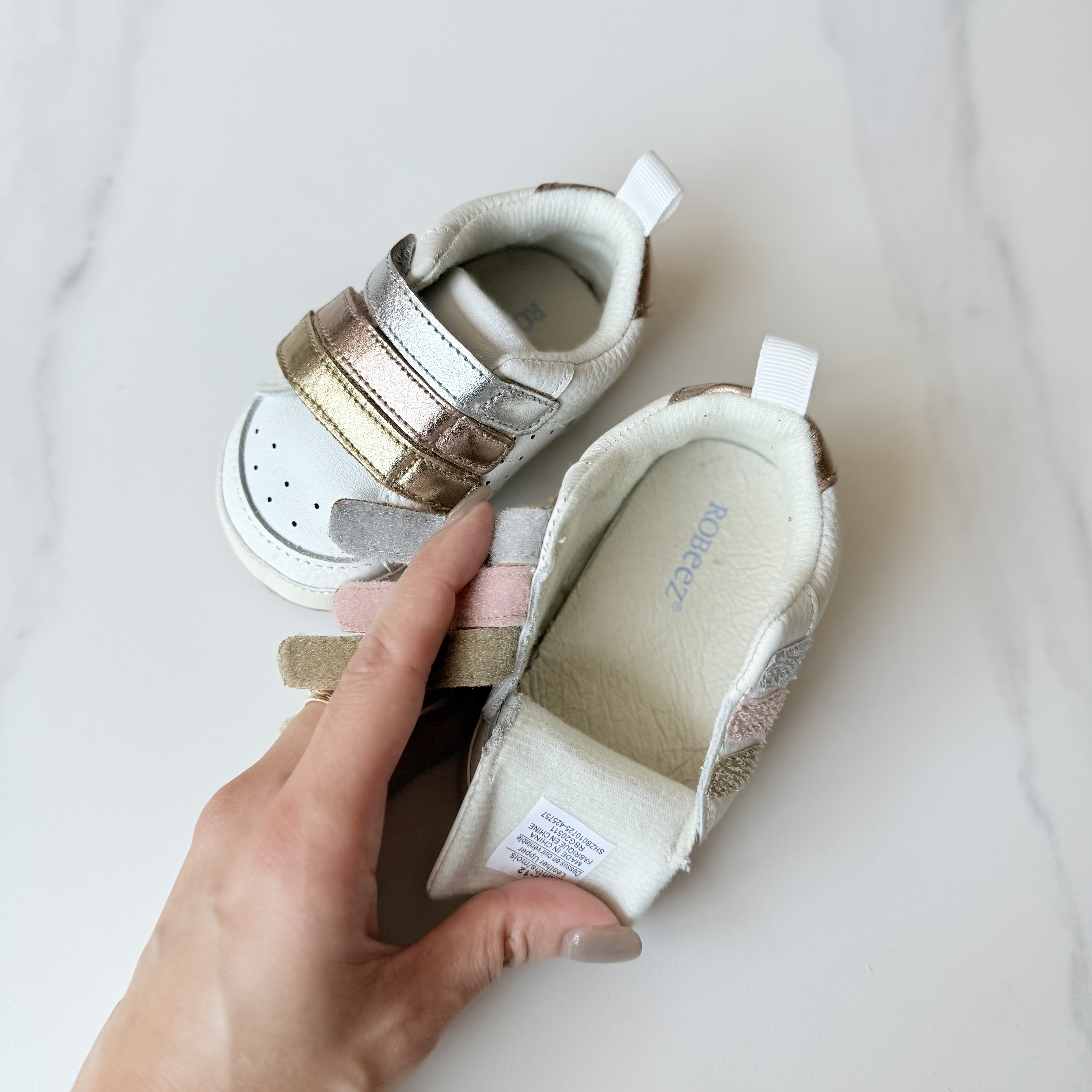
7. Robeez First Kicks — Novie

Robeez first kicks novie
- Sole: Suede / Rubber
- Fastener: Velcro
- Material: Leather
- Size: 9-12 M / 4.5 inches
- Price: 48.00 USD
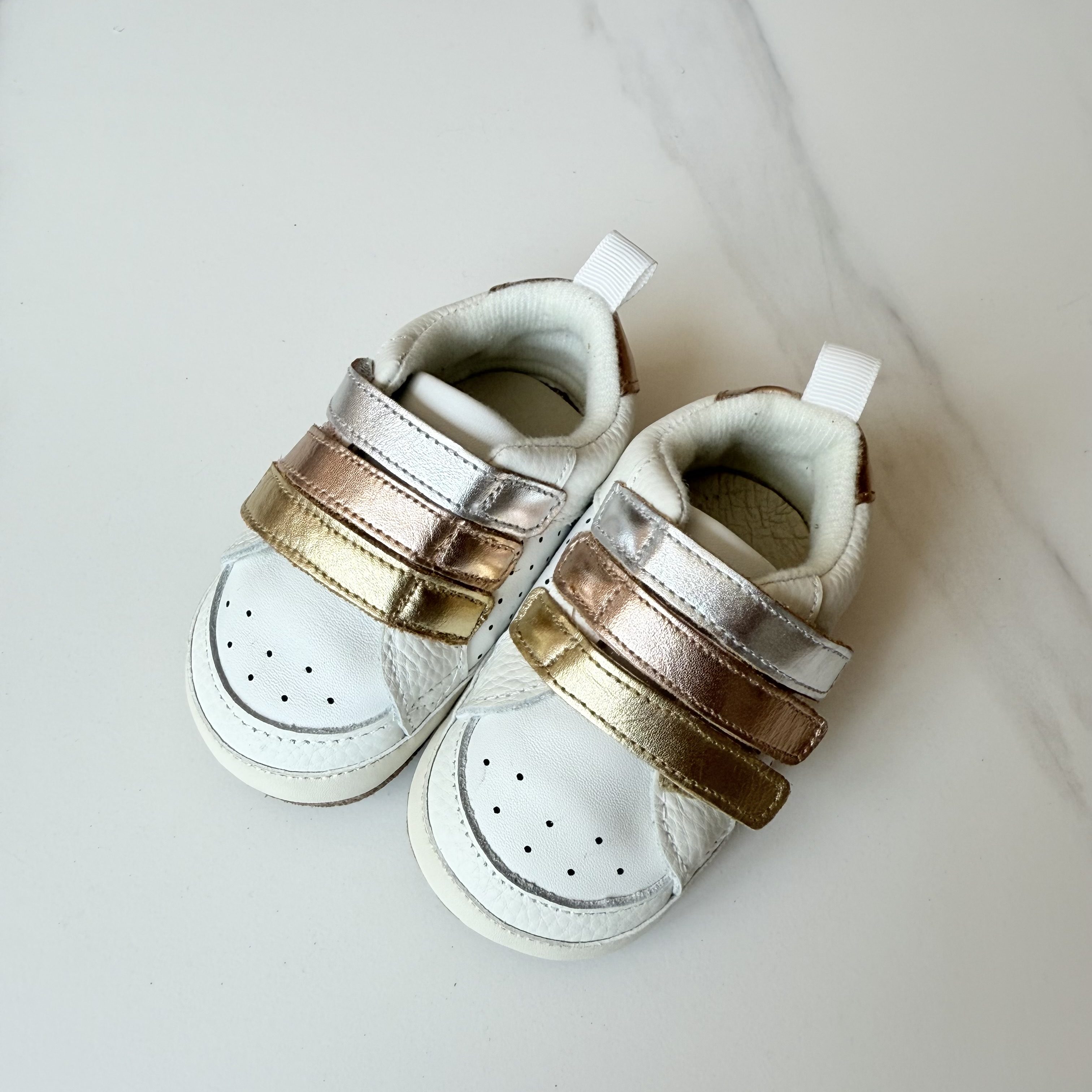
This was the surprise of the whole test. After trying the Robeez Soft Sole Crib Shoes, we weren’t expecting much. Then we tried the Robeez First Kicks in the Novie style, and both of us moms immediately said yes.
The tongue pulls all the way down, so Evie’s foot goes straight onto the insole — no wrestling, no scrunched toes. The three velcro straps look as good as they function: Evie cannot get these off, and they stay in place while walking. The hybrid sole: suede through the arch with rubber at the ball and heel — is exactly the balance we were looking for. Flexible where flexibility matters, protected where the foot meets the ground. The 9-12-month size leaves some room to grow without being so big that she’s tripping. These are our current shoes.
One note: sizing varies significantly between Robeez styles. The Novie 9-12 measures 4.5 inches, which left a reasonable amount of growing room for Evie’s 4-inch foot. A different Robeez style in what was labeled the same range measured 4.9 inches — completely unwearable. Measure every time.

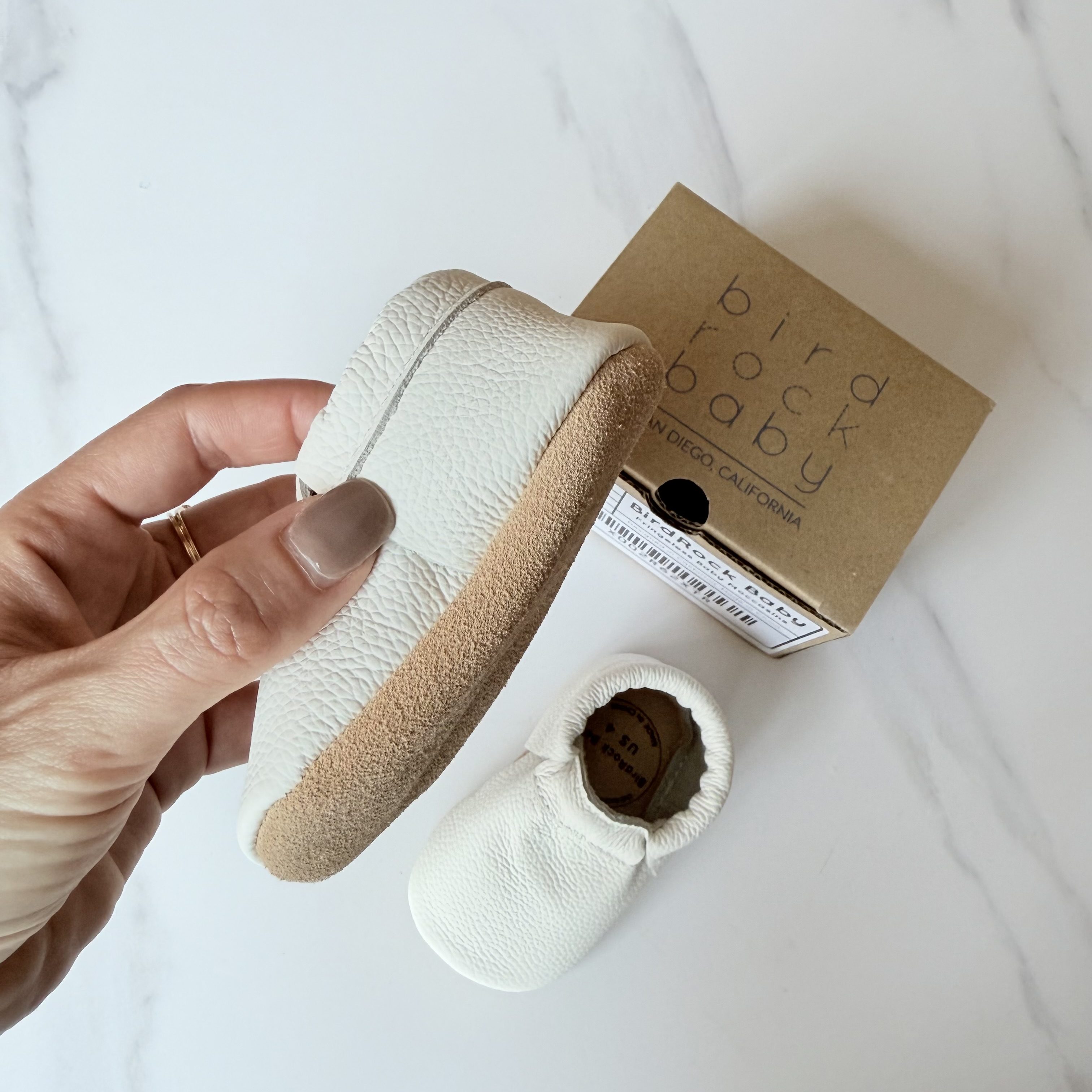
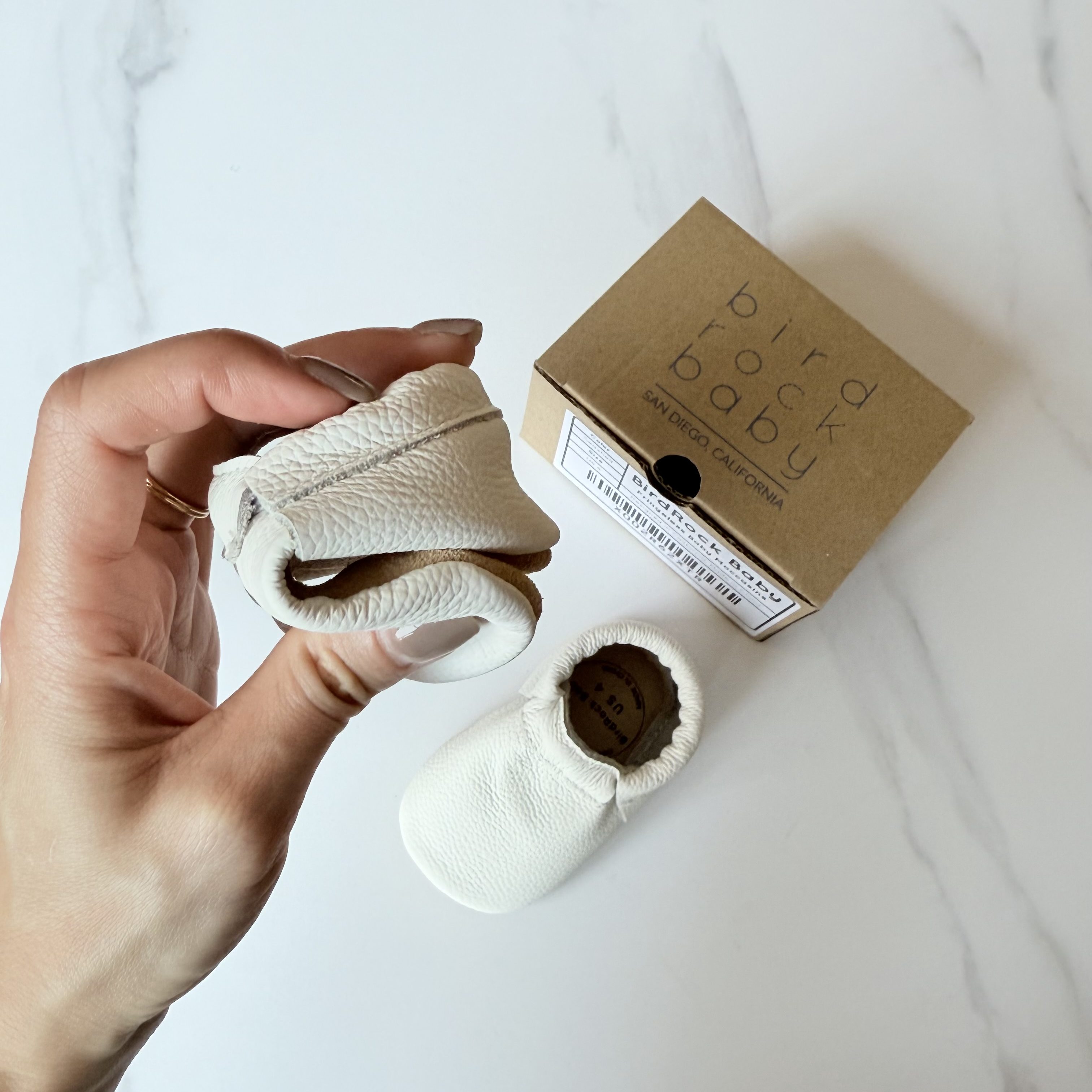
8. Birdrock Baby Fringeless Moccasins
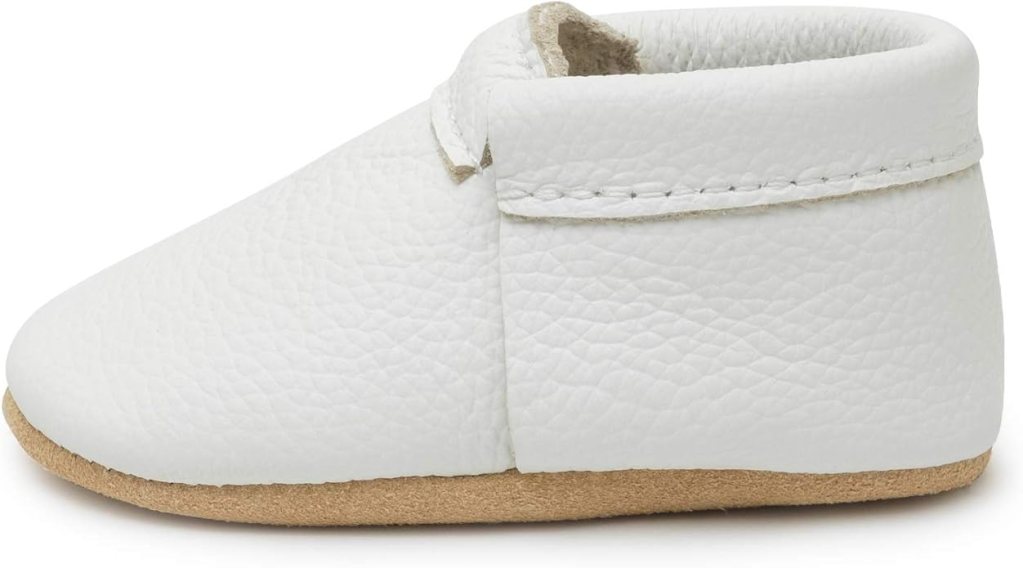
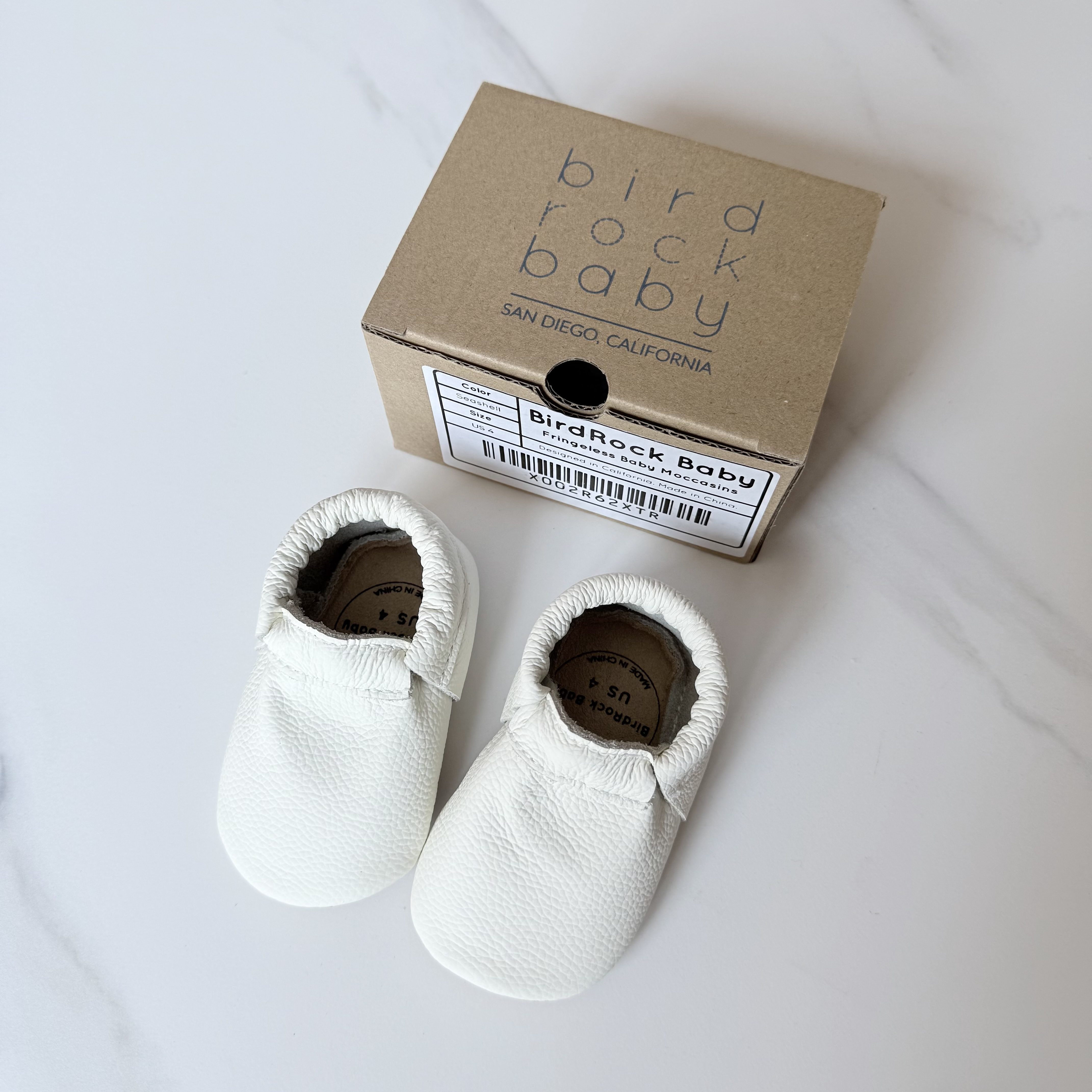
Birdrock Baby Fringeless Moccasins in seashell color
- Sole: Suede
- Fastener: Elastic
- Material: Leather
- Size: 4 / 4.5 inches
- Price: 29.95 USD
A genuine surprise. Despite the elastic opening on the Birdrock Baby Fringeless Moccasins — which we’d already decided we didn’t love with the Robeez Soft Sole Crib Shoe — this one went on easily and fit well. The suede sole is extremely flexible and gives that close-to-the-ground feel we were after. The white leather is clean and simple. Our hesitation is purely practical: a fully suede sole on NYC pavement is going to wear through fast. For indoor use or light outdoor activity, these are lovely. For a city baby spending time on playgrounds, we’d want something more durable on the bottom. But we seriously considered keeping these as a second pair.
9. Lafegen Baby Girls Mary Jane Flats
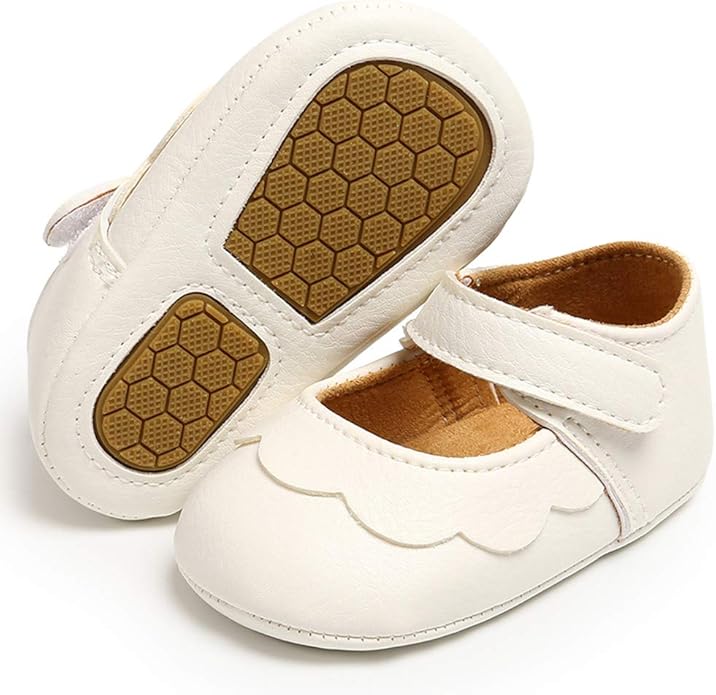
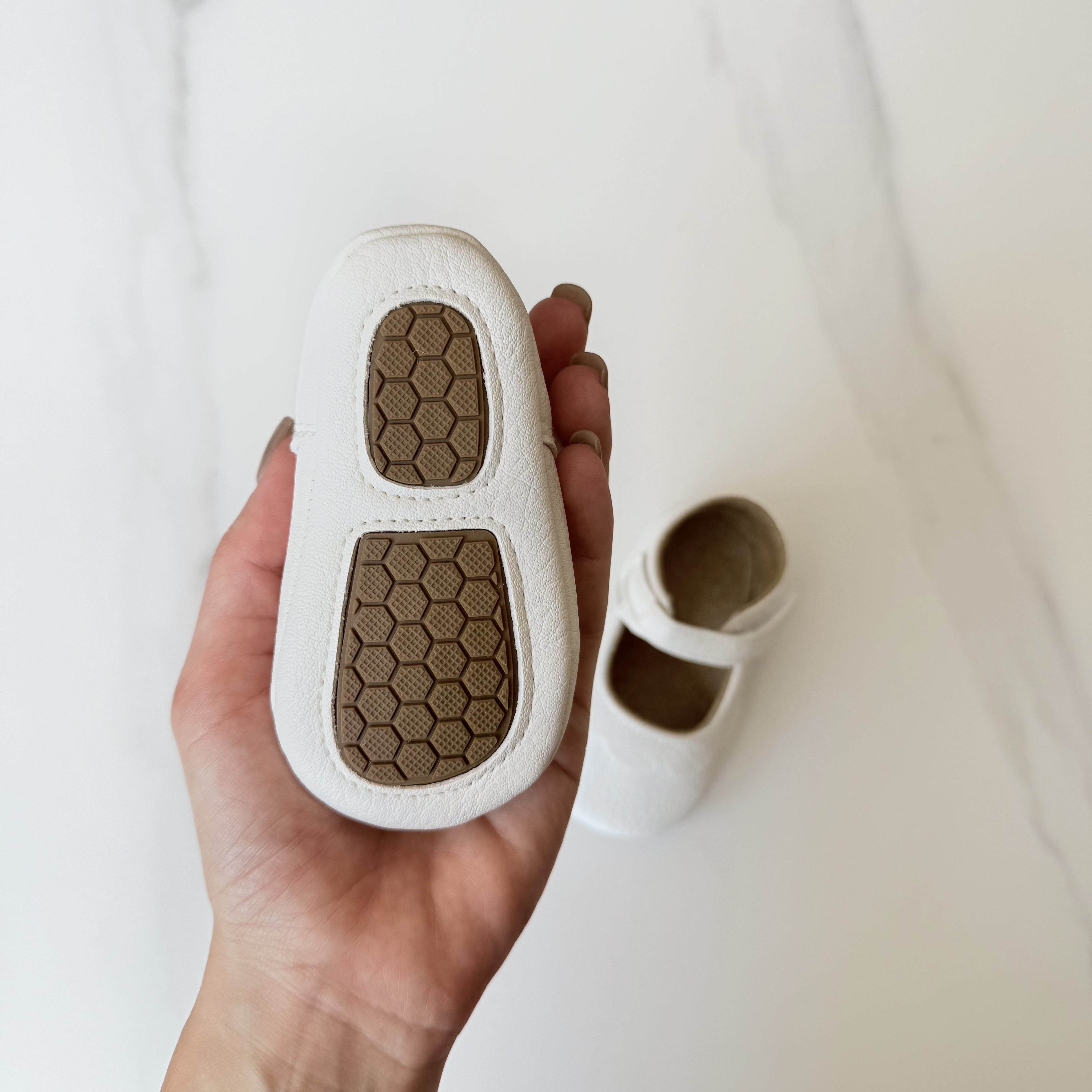
LAFEGEN Baby Girls Mary Jane Flats in scalloped white
- Sole: Suede / Rubber
- Fastener: Velcro
- Material: Faux Leather
- Size: 0-6 Month / 4.3 inches
- Price: 11.99 USD
We found Lafegen Baby Girl Mary Jane Flats through our sister-in-law, not a research rabbit hole — and they ended up being our runner-up.
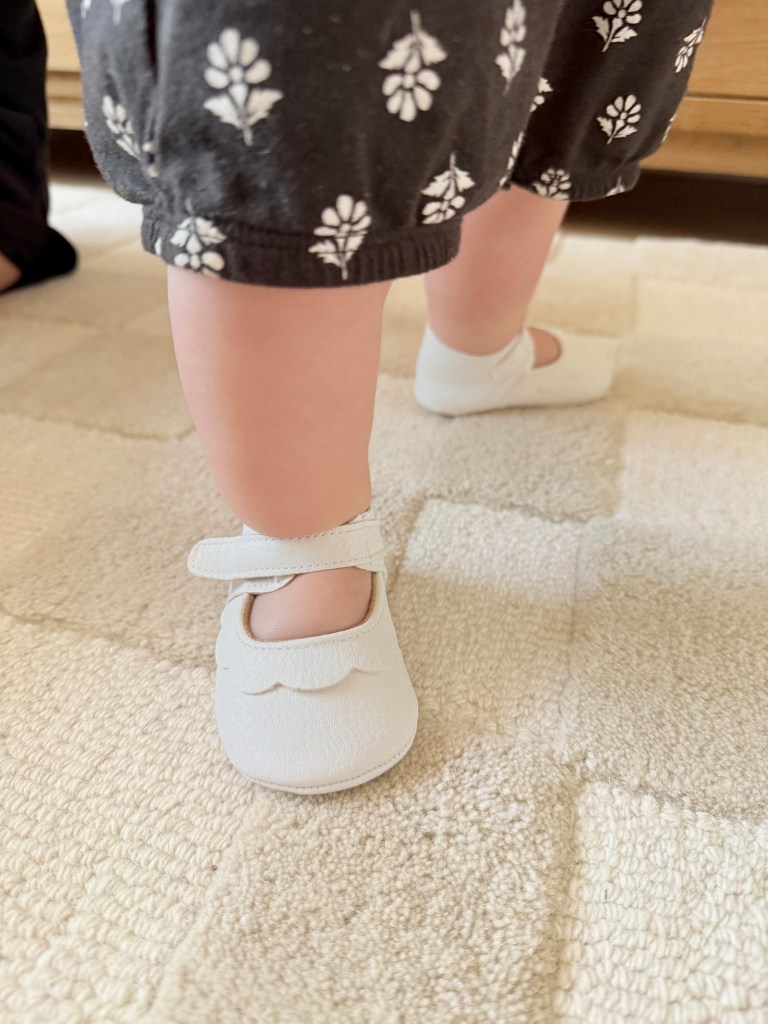
Yes, Evie at ten months is wearing the 0-6 month size, which is just another example of how inconsistently baby shoes are sized. From a measurement standpoint, the 4.3-inch length fit well. The hybrid sole is flexible and protective in the right proportion. Low cut around the ankle, easy to get on, and stayed on while walking. The scalloped white detailing is genuinely cute.
The honest caveat: it’s faux leather from Amazon. We can’t speak to how it holds up over time, and we have some questions about how and where it was made. But for a baby who will outgrow shoes in weeks or needs a fancier look for a special occasion, the value is real. Worth trying.

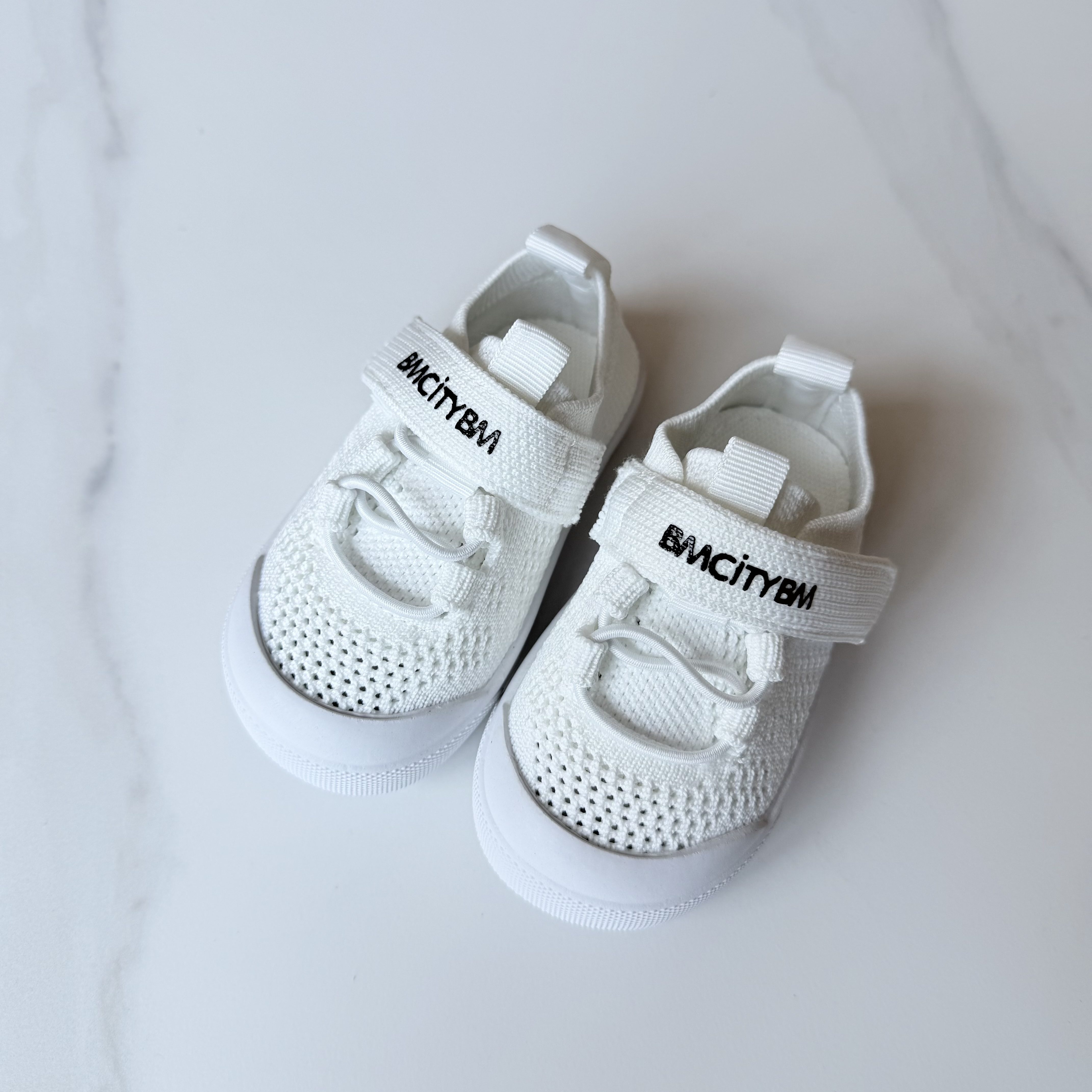
10. BMCiTY Non-Slip Infant Sneakers
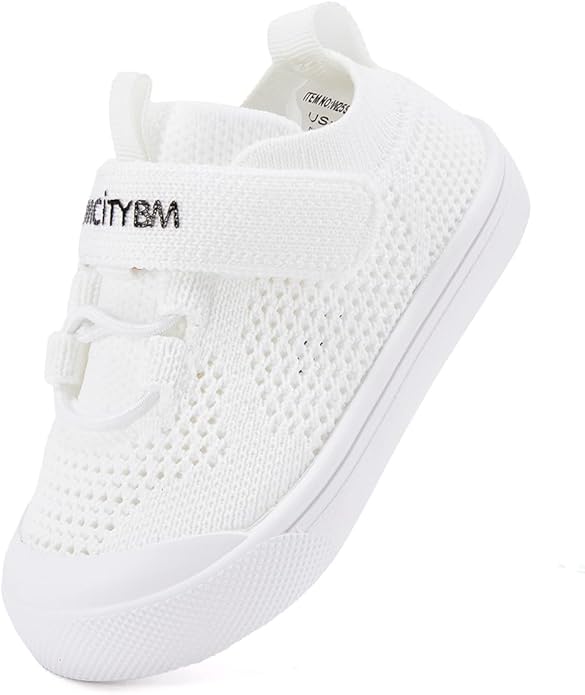
BMCiTYBM Baby Shoes in white mesh
- Sole: Rubber
- Fastener: Velcro
- Material: Mesh Textile
- Size: 6-12 Months / 4.8 inches
- Price: 20.47 USD
The BMCiTYBM Baby Shoes were our “let’s just try it” entry. Lightweight and breathable, which would be great for summer. But the sizing ran large and they fell right off Evie’s feet. Also, the rubber sole was thicker than we’d want for a first walker even though it was flexible. Filed under: good idea, wrong execution for our kid.
Where We Landed
Our shoe right now is the Robeez First Kicks in the Novie style, size 9-12 months. Of everything we tested, it came closest to the brief: hybrid sole, wide opening, three velcro straps that actually stay put, and enough growing room without being comically large. Beyond the function, it also looks genuinely great — the Novie has a sneaker silhouette that turns Evie’s summer baby outfits into something that reads more like a toddler with a sense of style. For an assisted walker heading into summer in New York City, they’re the right shoe for right now.


The surprise runner-up was the Lafegen Mary Jane flat at $11.99 — a find from our sister-in-law that beat out shoes four times its price on fit and flexibility alone. We have questions about long-term durability and manufacturing, but for a baby outgrowing shoes every few weeks, it’s hard to argue with. We’ll report back.
As for where we go next — that depends entirely on where Evie goes next. Once she’s walking independently and confidently, we’ll be looking at the Ten Little First Walker or the See Kai Run Stevie Mini — both have the flexibility and wide toe box we care about, with slightly more structure for a baby moving under her own power. Further down the road, when she’s running across a playground on her own, Stride Rite starts to make a lot more sense. The memory foam insole that felt wrong at ten months might feel very right at three years.


Before You Buy First Walker Shoes
Start by asking the parents around you what’s working — your mom group, your pediatrician, the parents at the park. Their experience is real and worth knowing. From there, measure your baby’s foot and do your own homework, because the right shoe for their foot shape and their specific stage of walking might be different from what worked for everyone else’s baby. Ultimately, trust the people around you but trust your own instincts in equal measure.
Beyond that, buy for the stage your baby is actually in right now and leave a little room in the size — babies grow fast! In terms of material, a shoe that’s too much for today won’t help them learn to walk, and a shoe that’s not enough won’t protect their feet when they need it. The window for each stage is short — Evie will be in a different shoe by fall, and probably another one after that. So get the right one for right now — and have some fun with the aesthetics while you can! After all, it’s only a matter of time before your toddler will tell you exactly which shoes they want and your input becomes optional.
Shop the Shoes
Our Picks
Worth Trying
Also Tested



Leave a Reply