
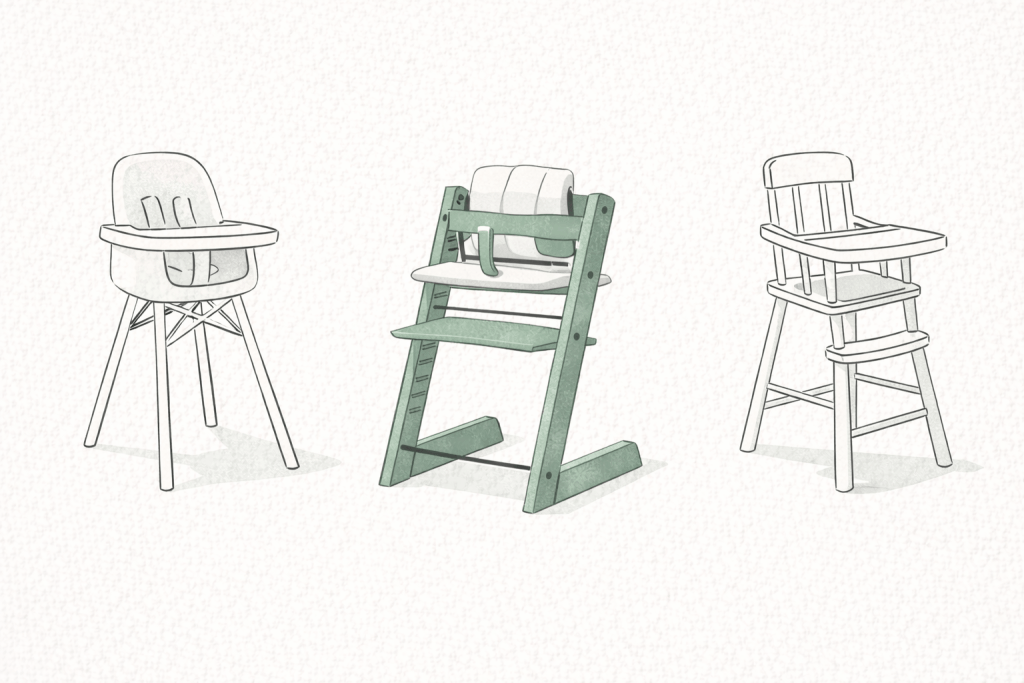
Every parent we know has a strong opinion about their high chair — including ours, the Stokke Tripp Trapp. This is something nobody warned us about before having a baby: that the high chair would become a topic of genuine, recurring, passionate conversation among otherwise reasonable adults.
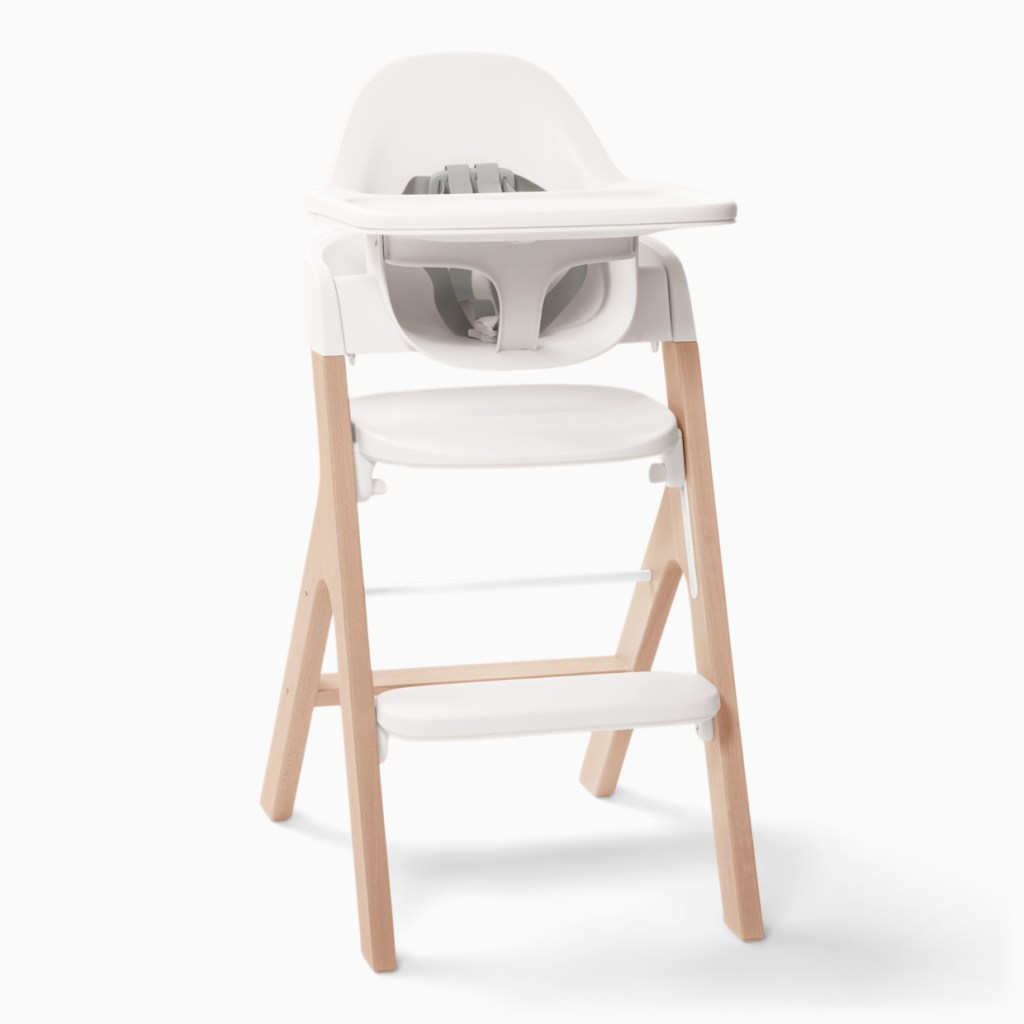
Many of our friends went with the Mockingbird, the Lalo, the Stokke Tripp Trapp, or the Nuna Bryn.
Disclosure: This post contains affiliate links. If you purchase something through one of these links, I may earn a small commission at no extra cost to you. I only recommend products we actually use and love.


Additionally, we’ve fed Evie in the IKEA ANTILOP at her grandparents’ house and used a hotel-supplied Graco DuoDiner during a ski trip in Wyoming. So we’re well acquainted with a variety of free-standing highchair options.
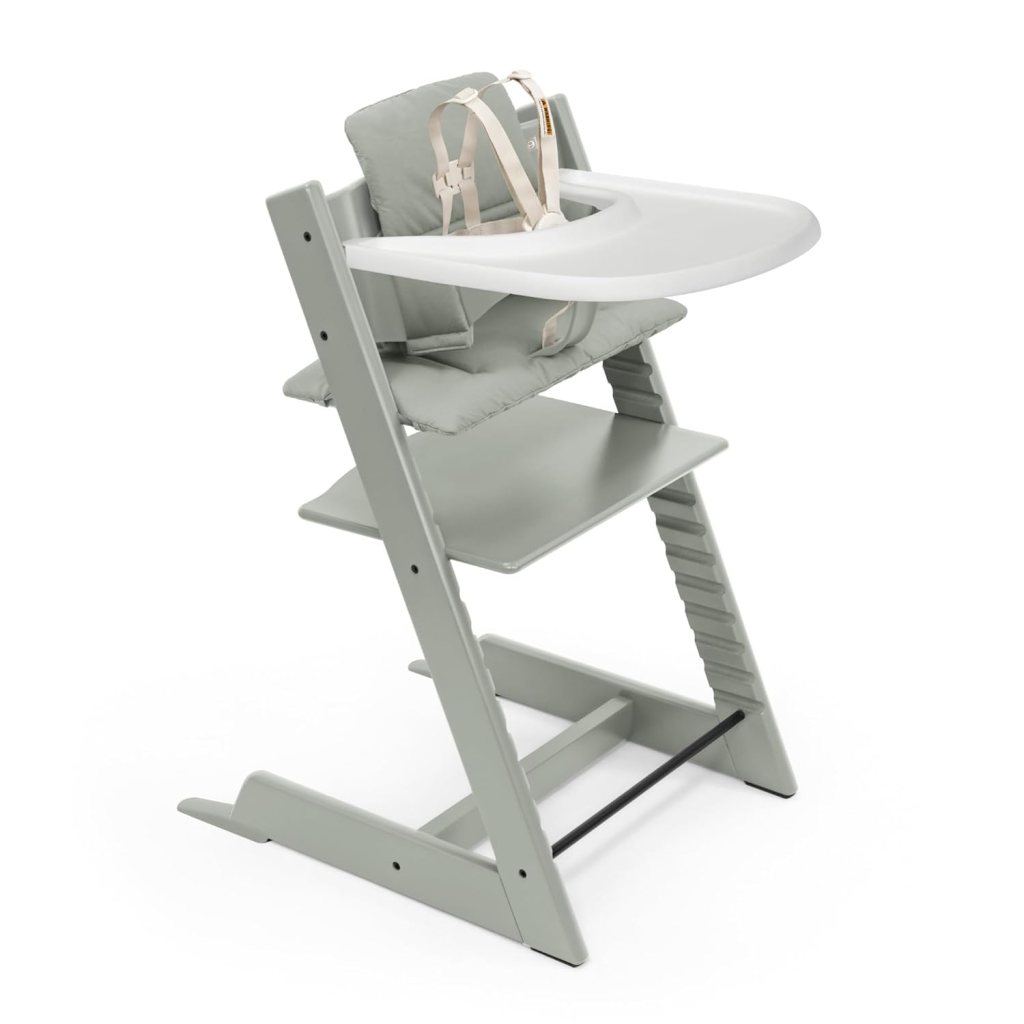
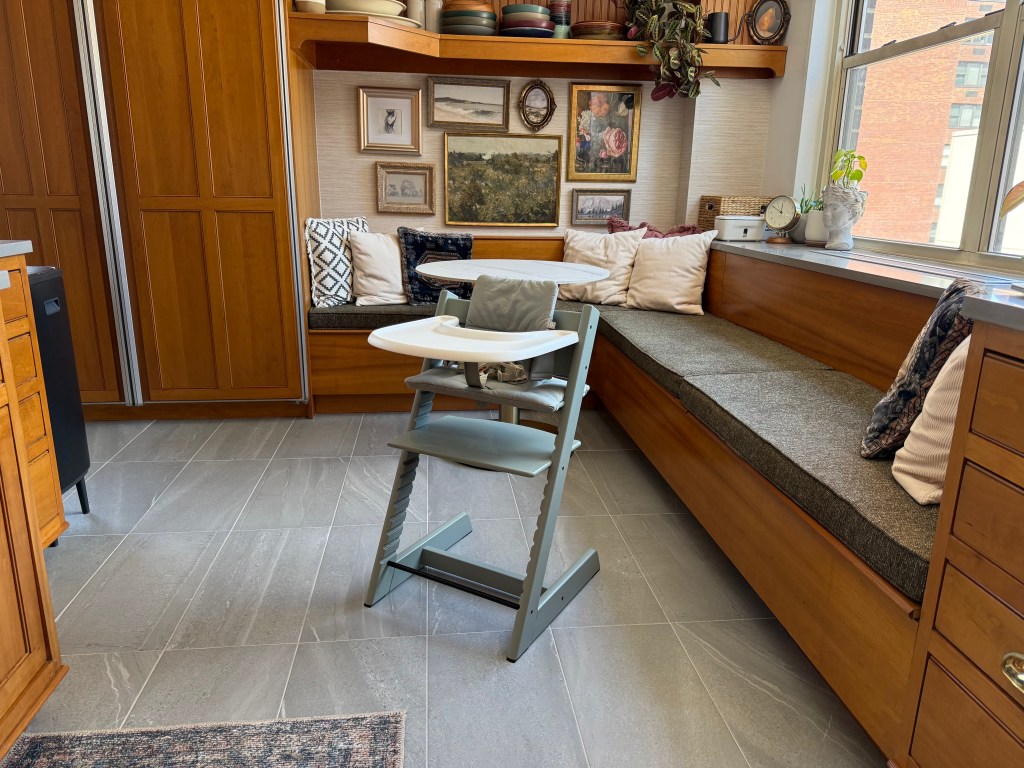
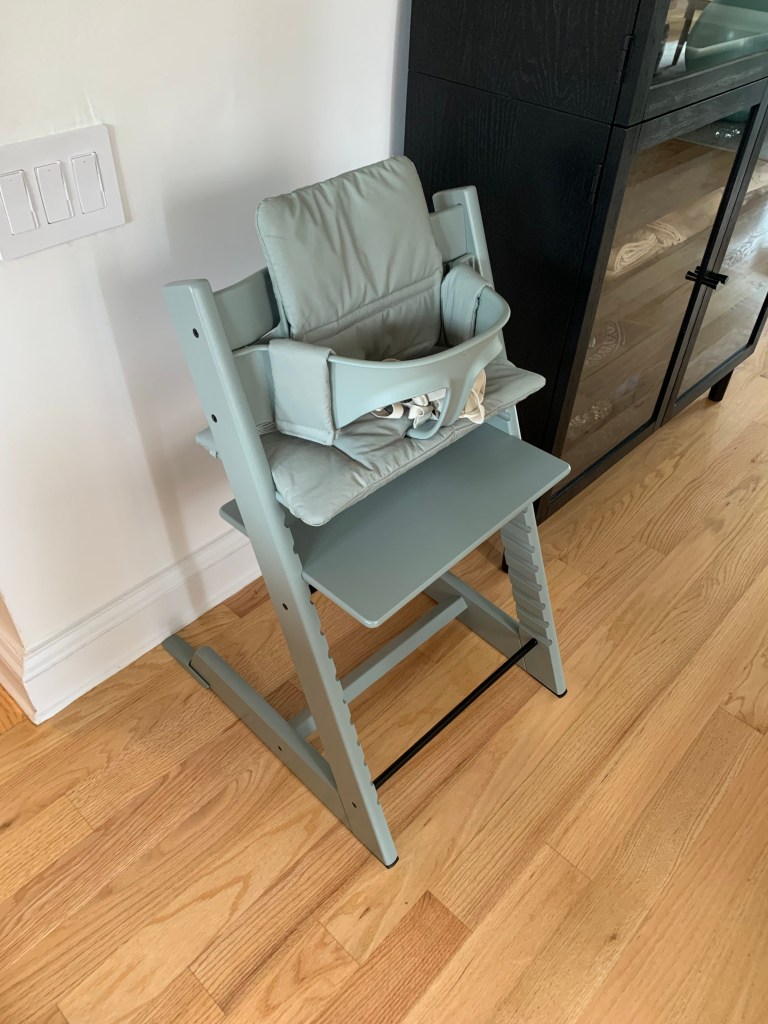
We have the Stokke Tripp Trapp in Glacier Green. The color is worth calling out because it was part of the decision: Stokke is one of the few brands offering a variety of genuinely playful, customizable options in this category. We originally wanted it in walnut to match our furniture, and we’re so glad it was unavailable when we went to buy it. The Glacier Green was a step toward bringing a youthful energy into our adult home, and it’s one of our favorite things to see in our kitchen every single day.
Why the Stokke Tripp Trapp was always the plan.
We didn’t agonize over this decision. The Stokke Tripp Trapp was the plan from the beginning — the design, the footprint, the wood construction. It’s the kind of object that looks like it belongs in a home rather than something you’re tolerating until your child outgrows it. Similar to the reaction I get to my Brabantia trash can, non-parents who are unfamiliar with the Stokke brand will often say “Oh, that’s a high chair?” in a surprised but genuinely impressed tone. In a New York City kitchen where every square foot is considered and nothing gets to just sit there taking up space, that matters.
Our introduction to the Tripp Trapp came before we’d given high chairs a second thought. A close friend, whose son is about a year and a half older than Evie, is the kind of person who researches everything — especially expensive, long-term purchases where practicality, safety, and longevity all have to be weighed. She had the Tripp Trapp, and watching her son eat lunch in it was our first real experience with the chair. The image stuck with us.
Shortly after, we took a long-awaited babymoon to Australia to visit a close friend in Sydney, and found ourselves in the middle of the same conversation on the other side of the world. Her entire mom network owned the Tripp Trapp and spoke about it the same way. One friend mentioned she’d bought an off-brand version for her second child to save money. Her exact words: “It’s not the same. The kids argue over who gets to sit in the Stokke.”
That was enough for us.
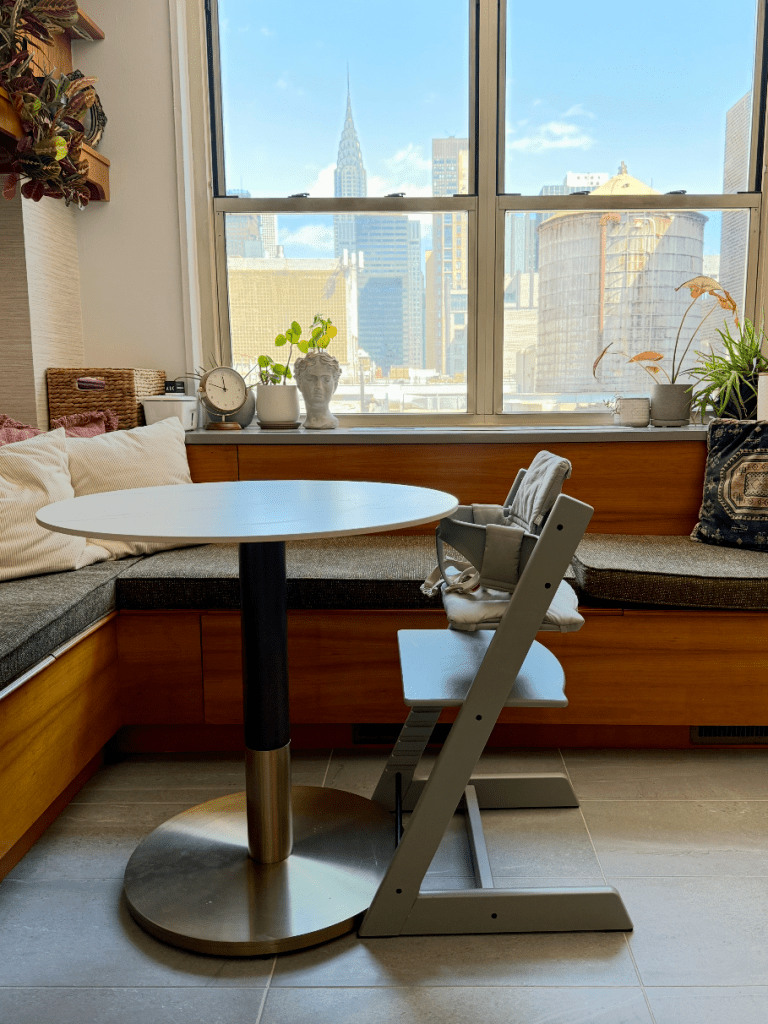
We have a large kitchen by NYC standards and we’re still aware of every inch. The Tripp Trapp’s footprint is one of its defining features. Slim, vertical, takes up almost nothing. The Ikea high chair at my mother-in-law’s house, which we trip over every single visit, is a useful point of comparison. Footprint is not a small thing when you live in this city.
The case our friends make for the Mockingbird
We hear this one the most, and honestly, the Mockingbird makes a genuinely good argument. The silicone straps wipe clean in seconds, the tray cover pops off and is dishwasher-safe, the footrest adjusts without tools, and at around $230, it comes in significantly cheaper than the Tripp Trapp with its seat and tray accessories. If you’re weighing price against features, the Mockingbird is a real contender.
Where we part ways is on design and construction. It’s a lot of plastic, and for us, that’s the central issue. The Mockingbird prioritizes function and ease of cleaning in a way that makes sense for a lot of families, but it diminishes the design value in a way we weren’t willing to accept. We also think the cleaning argument is more complicated than it first appears. The tray and the way the baby seat fits inside the toddler seat frame create their own crevices. Different crevices from the Tripp Trapp, but crevices nonetheless. And all parents know crevices = mess to be cleaned.
Since the Mockingbird is priced well below the Tripp Trapp, this is genuinely a decision about personal preference rather than budget. Different families will value different things, whether from a functional perspective, a design lens, or simply what feels right for their home.


The case for the Nuna Bryn
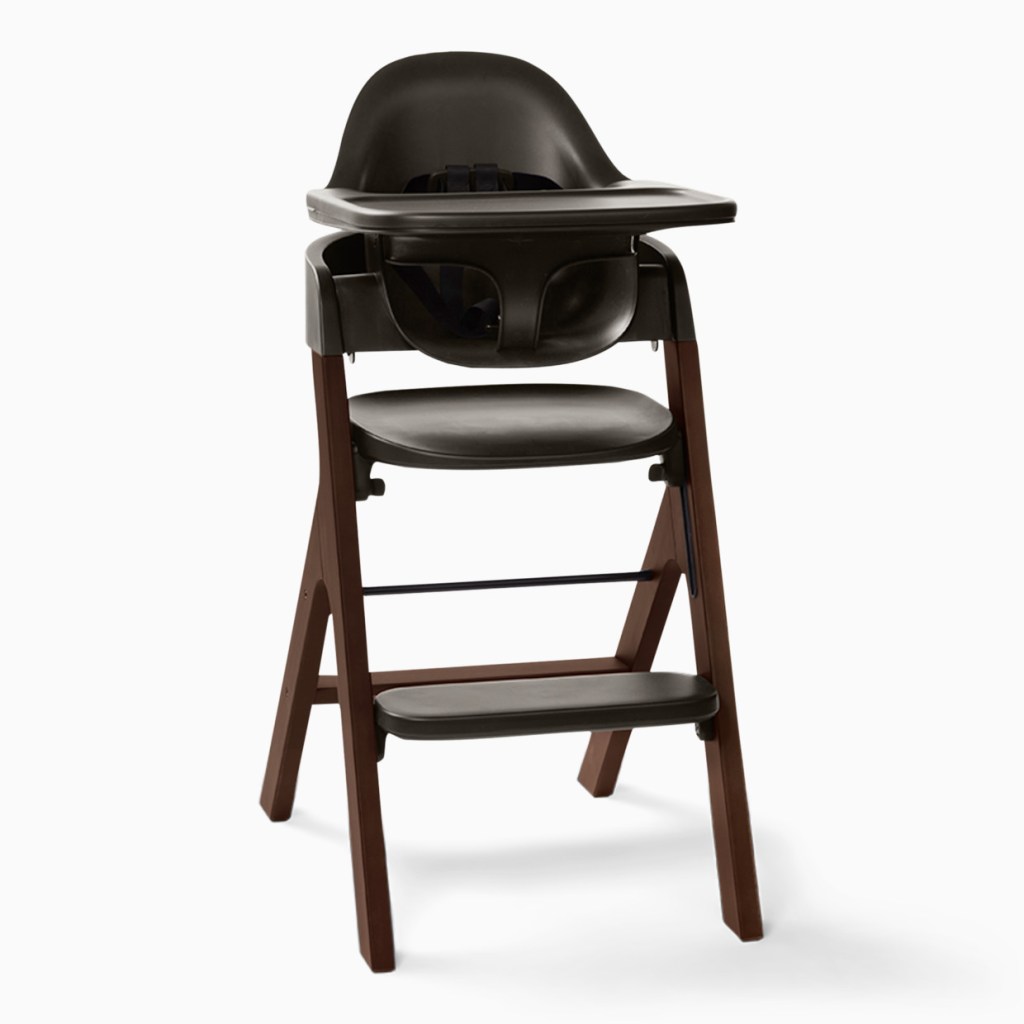
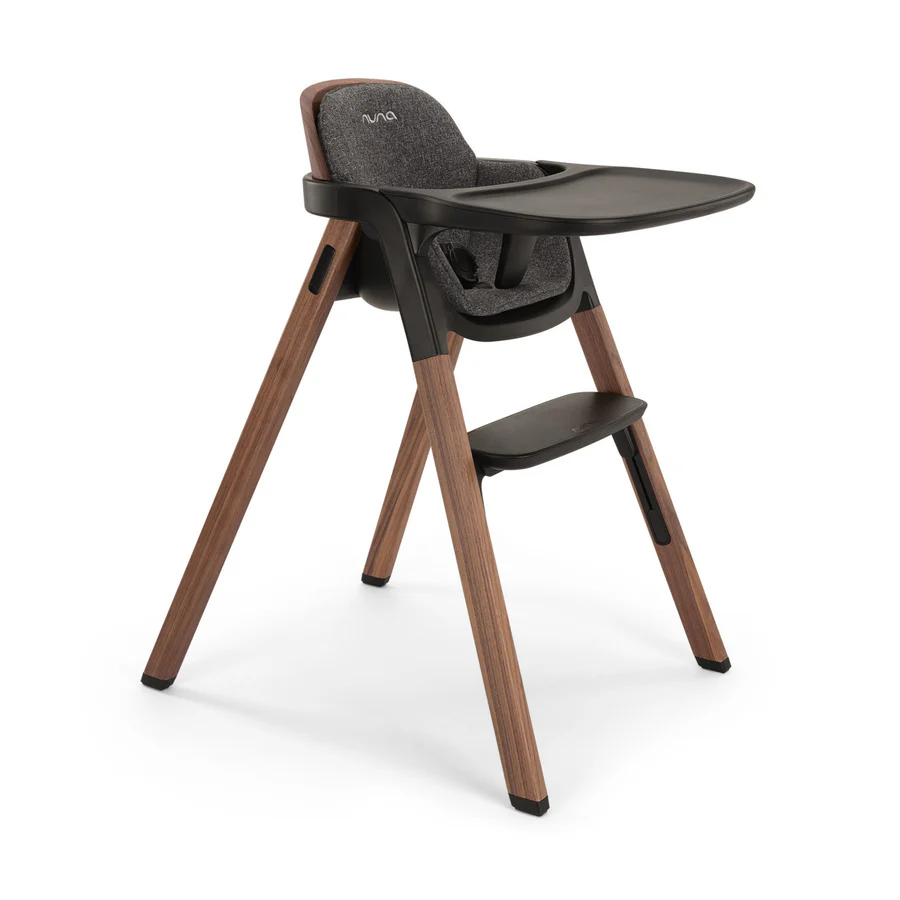
The Nuna Bryn is the design-first choice in this category, and it earns that reputation.
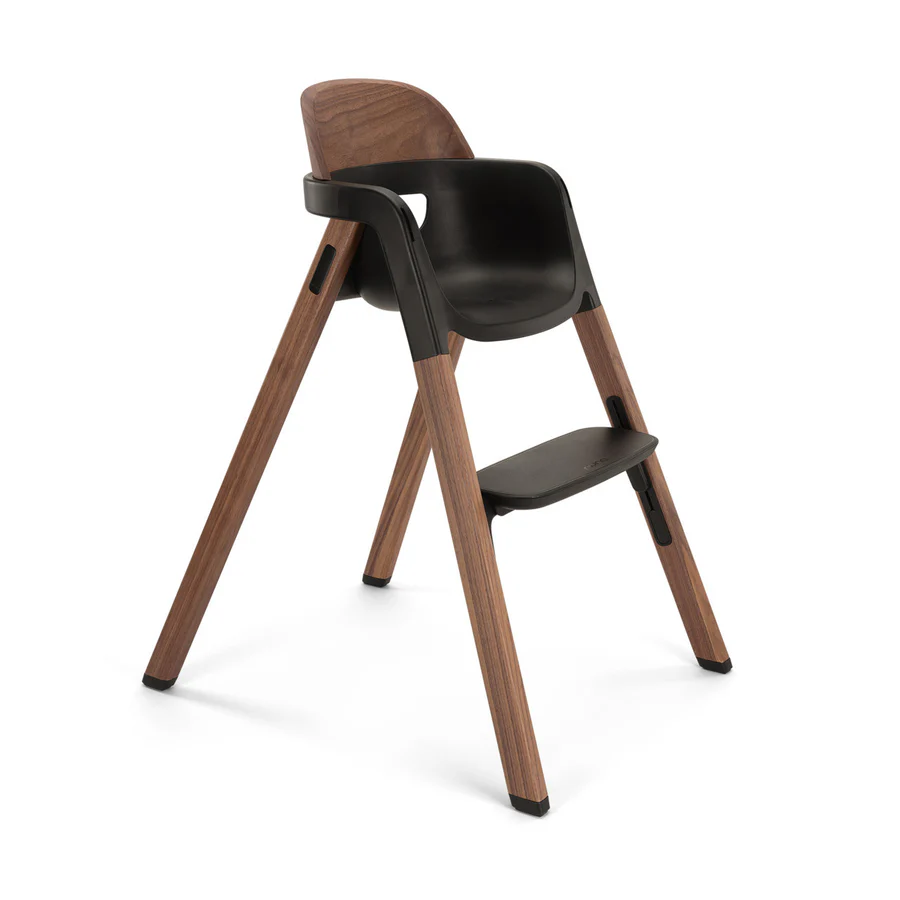
Crafted from hand-selected FSC-certified black walnut and maple wood — each chair with its own unique grain — it assembles tool-free in minutes and brings a genuinely sculptural quality to a kitchen. It has the energy of an Eames lounge chair: warm, considered, the kind of object that looks like it was chosen rather than defaulted to. The standout feature is the MagneTech secure snap, a self-guiding magnetic buckle that automatically locks into place, which means something to anyone who has wrestled a wriggling baby into a five-point harness at 6 am.
It was honestly a close second for me. The reason it didn’t win: the footrest. Three positions sounds like flexibility until you understand that the goal of a high chair footrest is to create a 90-degree angle at the knee for proper posture and digestion as your child grows. Babies and kids come in a range of sizes, and three fixed positions leaves less room to dial that in precisely over time compared to the Tripp Trapp’s fully adjustable system. For a chair at this price point, that limitation is worth knowing before you buy.
The case for the Lalo
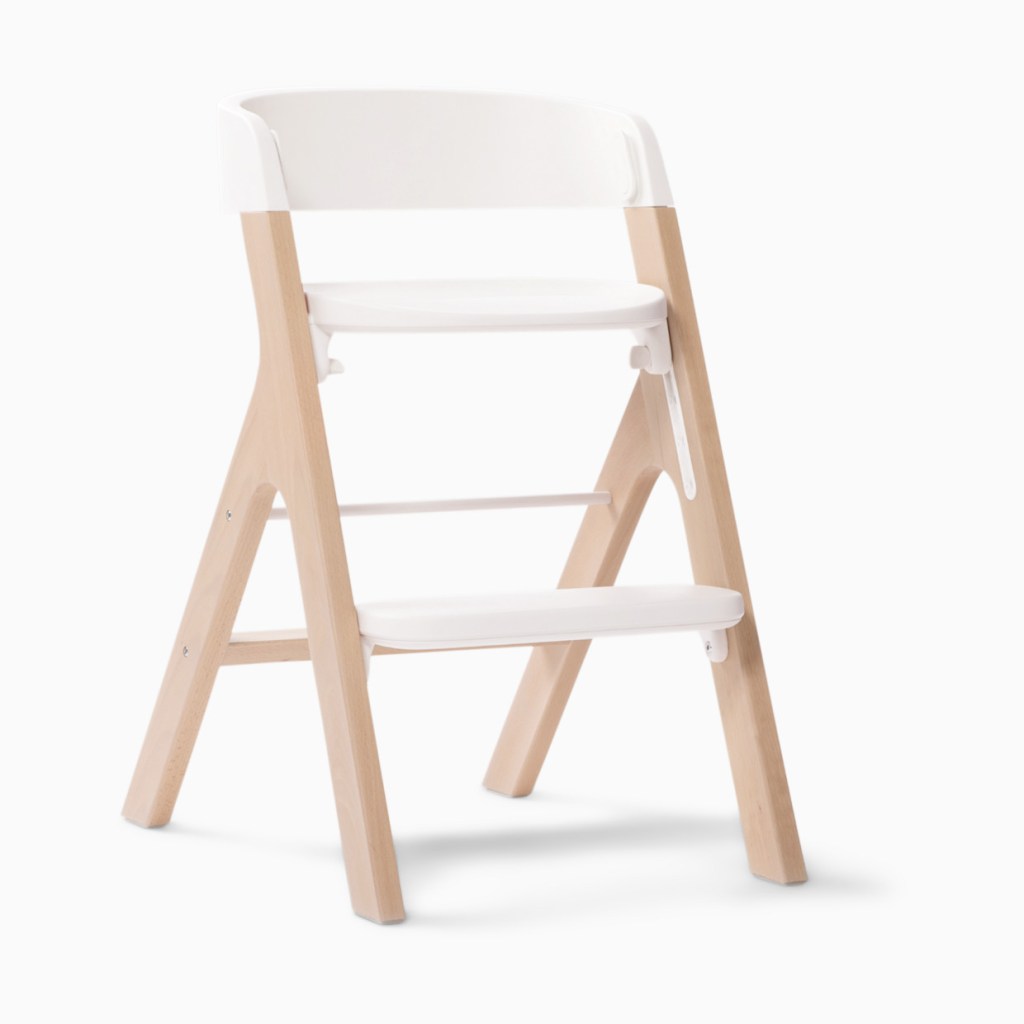
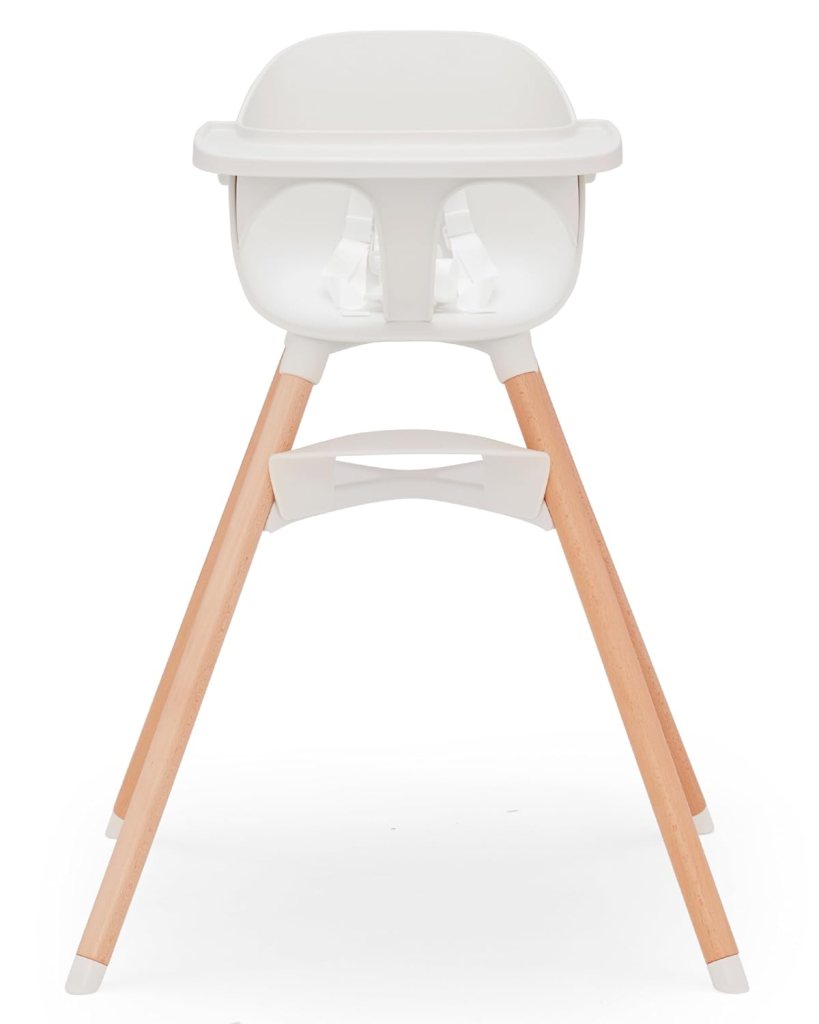
The Lalo has clean lines, a minimal footprint, wipeable silicone straps, soft youthful colors and a dishwasher-safe tray. Visually, it carries the energy of an Eames Eiffel chair [I’m heavily influenced by Charles and Ray Eames if you can’t tell] – architectural, sleek, quietly iconic. I actually owned a set of Eiffel dining chairs in my twenties and loved them. That’s exactly why the Lalo wasn’t for me. That silhouette belongs to a different chapter of my life, not my motherhood chapter.
Our friends who have it tell a more complicated story beyond the aesthetics. The silicone straps are a plus, but they’ve run into ongoing frustrations with the tray attachment, the wide leg footprint in their kitchen, the buckle mechanism, and the limited footrest positions. Like the Bryn, it offers limited adjustability, which makes it harder to achieve that optimal 90-degree knee angle that feeding specialists recommend as your child grows.
When they visited recently, they used our Tripp Trapp to feed their nine-month-old daughter. The moment she was in the chair, the comments started: how sturdy it felt, how easy it was to buckle her in, how smoothly the tray snapped into place right in front of her. How nice it looked. By the end of the meal they were doing the quiet math of buyer’s remorse out loud. We said what we always say: we’re really happy with Stokke Tripp Trapp.
We didn’t gloat. Much.


Why we stand by the Tripp Trapp
After months of this conversation, our reasons are well organized.
- The footprint. Slim, vertical, takes up almost nothing. This is the first reason and it’s the decisive one for city living.
- The construction. Solid European beechwood, sustainably sourced, built to last not just through Evie’s childhood but potentially well beyond it. The Tripp Trapp has been made since 1972. Families are passing them down across generations. That longevity isn’t marketing, it’s the actual history of the product.
- The color options. Genuinely underrated. The Tripp Trapp comes in a variety of colors. We chose Glacier Green, and it’s a pleasant, joyful pop in our kitchen without being obnoxious. My brother-in-law has it in Terracotta. It has a point of view. It’s not just black, white, and natural wood.
- The tray. The grooves on the underside are a real thing. Water and food can get trapped there, and it’s worth knowing going in. Our approach is simple: we spray it down in the sink and put it back on the chair to dry. No drama, no special process. It works fine for us and has never felt like a burden in daily use.
- The harness and cushions. The fabric harness is a legitimate complaint about this chair. The straps are attached to plastic hardware, which makes them less than ideal for the washing machine, so spot cleaning is the reality. Our workaround is a bib or smock over the harness during meals, which cuts down on the grime significantly. The cushions are a different story. We have two, swapping them out to wash in the washing machine is straightforward, and they’re genuinely comfortable for Evie.
- The adjustability. It requires tools, which is the most common complaint and a fair one. It’s not difficult, just not as quick as the Mockingbird’s tool-free system. That said, you’re not adjusting it daily — we’ve set it for visiting toddlers of different sizes without much trouble and moved on.
Worth noting: Stokke did release a newer version with tool-free adjustment, though from what we’ve seen it introduces more plastic components to achieve that and an overall design change, which moves it away from everything we loved about the original. We’ll stick with ours.
Building it out
One thing to know about the Tripp Trapp before you buy: the base chair is exactly that — a base. The baby seat, the tray, and the cushions are all sold separately, though many retailers offer bundles that package them together, which is how we bought ours.
Some people see the à la carte pricing as a downside; we see it as a reflection of how the chair is designed — as a long-term piece of furniture you configure for your home rather than a product you take out of the box fully formed. We bought ours before Evie arrived, before we knew she was Evie, which meant color was doing a lot of work. It needed to be something gender neutral that still said “a child lives here” without shouting it. Glacier Green did exactly that. It felt playful without being juvenile, and it fit into our kitchen in a way that a standard wood or black finish wouldn’t have.
The accessories bring the total cost up meaningfully compared to something like the Mockingbird’s all-in price. That’s worth being honest about. But for a chair that’s going to be in your kitchen every day for years, the ability to choose thoughtfully felt right to us.
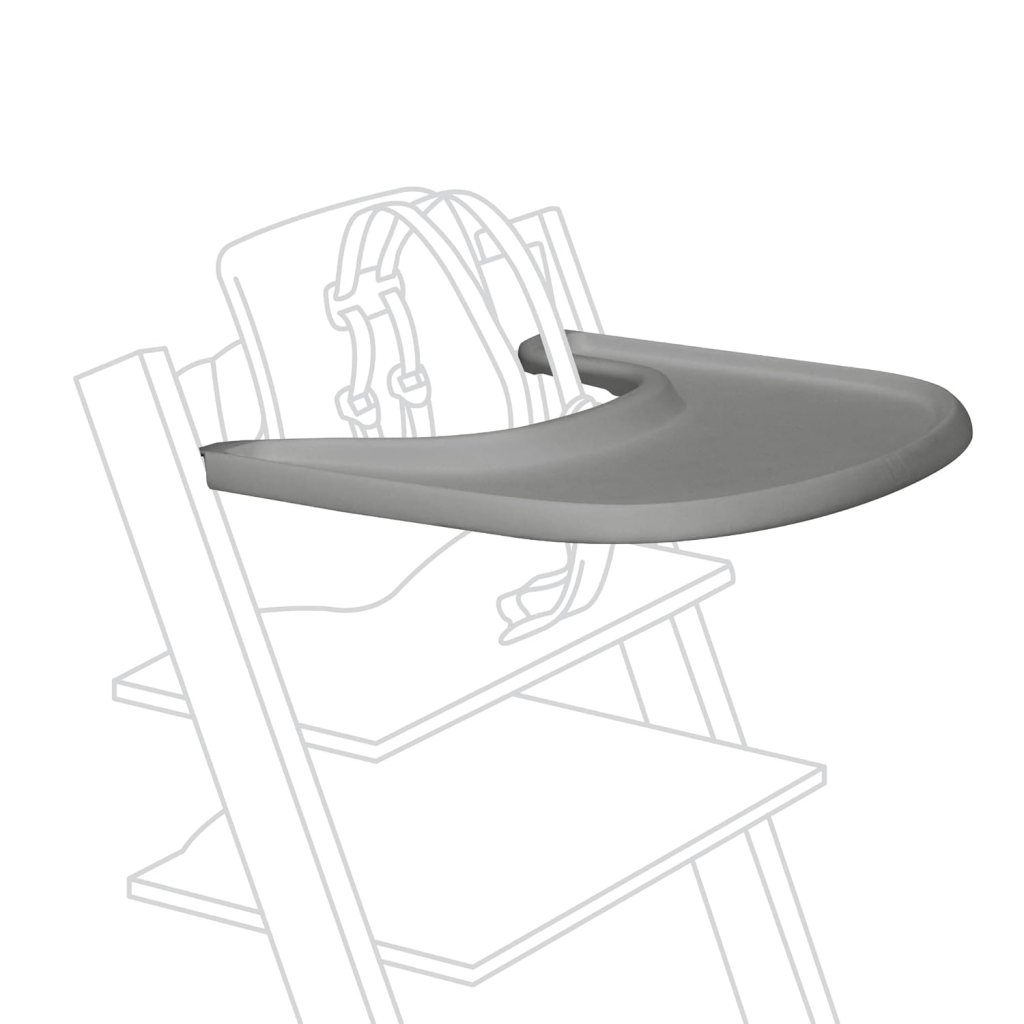
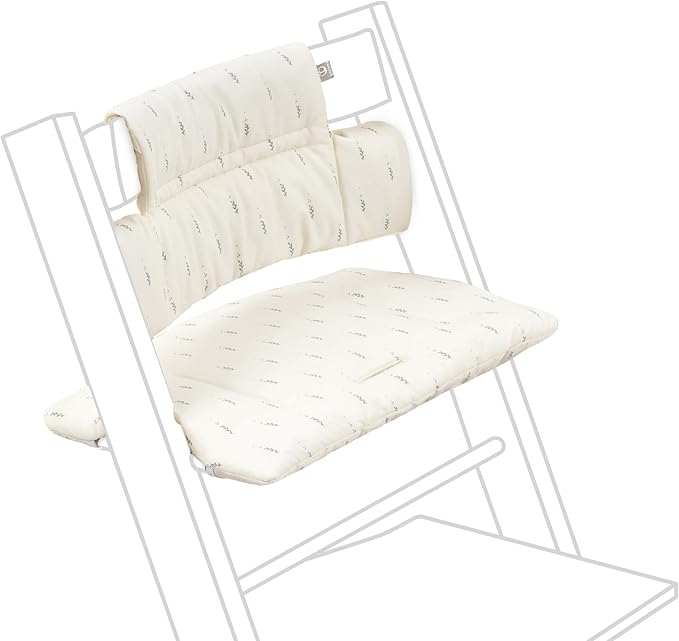
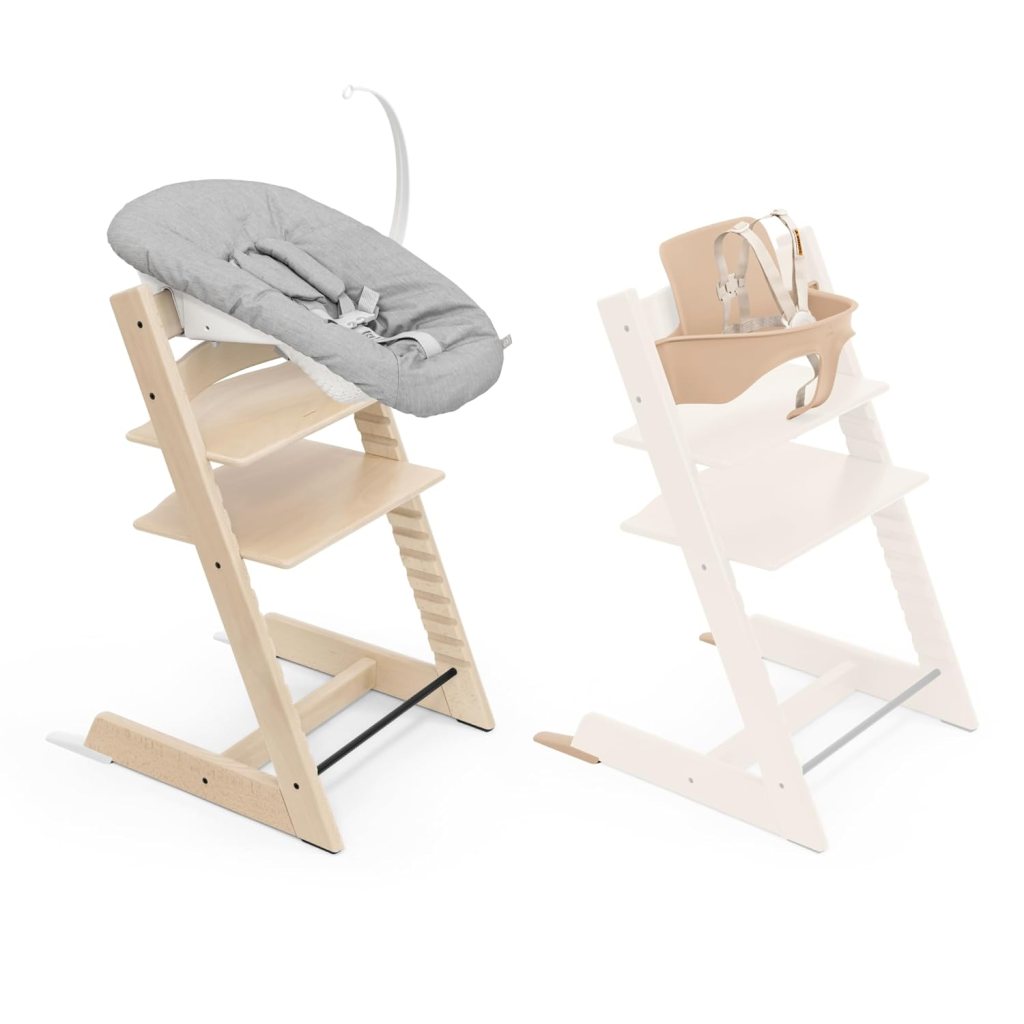
Stokke Tripp Trapp tray | Stokke Tripp Trapp cushions | Stokke Tripp Trapp baby set
What we actually say when friends push back
We can see your perspective. We’re really happy with ours.
That’s the whole response. Not because we haven’t thought about it — clearly we have. But at some point the right chair is the one that works in your kitchen, fits your values around design and practicality, and that you actually enjoy having in your home every single day.
The Mockingbird is a good chair. The Nuna Bryn is a beautiful chair. The Lalo is a clean, modern choice. The Tripp Trapp is ours, it’s in our kitchen every day, and we’d buy it again without question.

The chairs we considered:


Leave a Reply